
 DONATIONS
 Worldwide Radio Stations
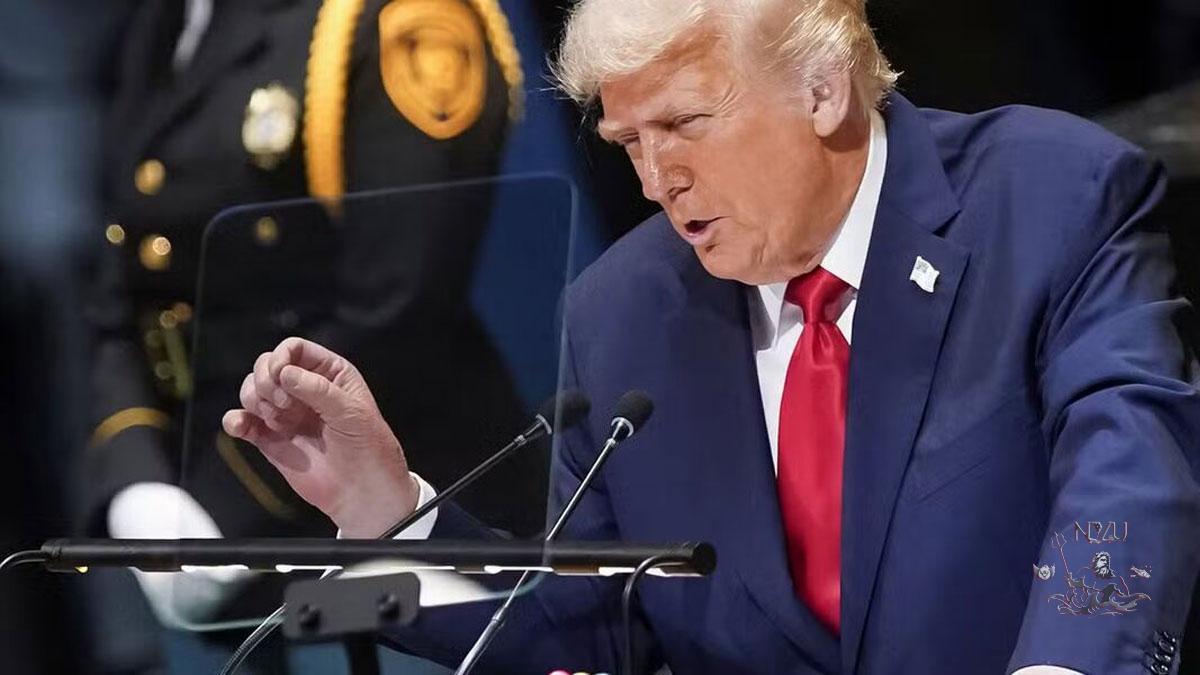
Sep. 23, 2025: President Trump Statement
"It was a great honor to speak before the United Nations. I believe the speech was very well received. It focused very much on energy and migration/immigration. I have been talking about this for a long period of time and this Forum, was the absolute best from the standpoint of making these two important statements. I hope everybody gets to watch it! The teleprompter was broken and the escalator came to a sudden hault as we were ridding up to the podium, but both of those events probably made the speech more interesting than it would have been otherwise. It is always an honor to speak at the United Nations, even if, their equipment is somewhat faulty. Make America Great Again! "
"It was a great honor to speak before the United Nations. I believe the speech was very well received. It focused very much on energy and migration/immigration. I have been talking about this for a long period of time and this Forum, was the absolute best from the standpoint of making these two important statements. I hope everybody gets to watch it! The teleprompter was broken and the escalator came to a sudden hault as we were ridding up to the podium, but both of those events probably made the speech more interesting than it would have been otherwise. It is always an honor to speak at the United Nations, even if, their equipment is somewhat faulty. Make America Great Again! "
Sep. 23, 2025: President Trump Statement
"It was a great honor to speak before the United Nations. I believe the speech was very well received. It focused very much on energy and migration/immigration. I have been talking about this for a long period of time and this Forum, was the absolute best from the standpoint of making these two important statements. I hope everybody gets to watch it! The teleprompter was broken and the escalator came to a sudden hault as we were ridding up to the podium, but both of those events probably made the speech more interesting than it would have been otherwise. It is always an honor to speak at the United Nations, even if, their equipment is somewhat faulty. Make America Great Again! "







 English
 Arabic
 French
 Spanish
 Portuguese
 Deutsch
 Turkish
 Dutch
Dutch
 Italiano
 Russian
 Portuguese (Brazil)
 Greek
Greek