


 DONATIONS
 Worldwide Radio Stations
Israeli Experts Analyze Two Month Hezbollah Ceasefire
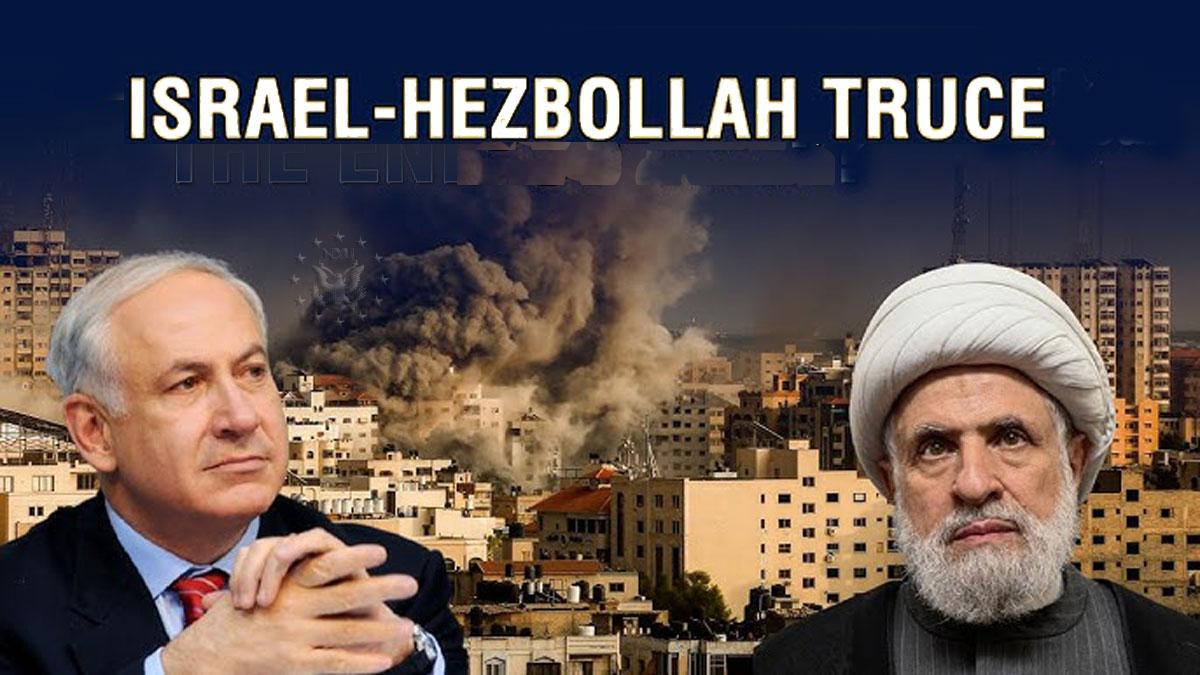
Experts unanimously agree that international forces tasked with preventing the organization’s resurgence in southern Lebanon are unlikely to succeed.
While Israel has achieved many of its goals in the war against Hezbollah, the blow to the terrorist organization was not fatal, and the future of an anticipated ceasefire agreement will depend on Israel’s ability to prevent future attacks, experts told The Press Service of Israel.
“The Israeli objective – to safely return northern residents to their homes – is achieved, at least in the near-term, by removing the risk of Hezbollah ground invasion or direct fire,” Meir Ben Shabbat, head of the Israeli Institute for National Security and Zionist Strategy, told TPS-IL.
Beyond this, other critical war objectives have been met. Hezbollah, which came to support Hamas, is leaving the conflict severely weakened. “The strongest arm of the Iranian tentacle is leaving bruised,” Ben Shabbat noted.
The organization is halting fighting in the north without resolving the Gaza war, effectively abandoning Hamas, while Israel has rebuilt its deterrence shattered on October 7th.
The emerging agreement calls for an initial two-month ceasefire. During this time, Hezbollah would withdraw its armed presence from areas of southern Lebanon south of the Litani River, as stipulated in by UN Security Council Resolution 1701, which ended the Second War in Lebanon in 2006.
Israeli forces will also withdraw from southern Lebanon during the ceasefire. The Lebanese Armed Forces would be deployed in southern Lebanon including along the 120 km border with Israel.
Israel’s Security Cabinet is due to discuss the agreement on Tuesday evening, and is expected to vote on it.
“An important shift in the last two to three months is that Israel no longer fears Hezbollah,” Eitan Shamir, head of the Begin Sadat Center for Strategic Studies told TPS-IL.
“Recall the initial expectations of a war with Hezbollah – thousands of civilian casualties, infrastructure collapse… None of this materialized. Now we know – and they know – that we can defeat them.”
However, Hezbollah’s setback was not decisive. The terrorist organization can potentially recover with Iran’s assistance and under the ceasefire’s protection.
Experts unanimously agree that international forces tasked with preventing the organization’s resurgence in Southern Lebanon are unlikely to succeed.
“Reliance on the Lebanese army or other forces has not proven effective in the past, and there’s no reason to believe it will in the future,” Ben Shabbat explained.
“Israel would have been better served by insisting on a demilitarized zone that remains empty and can be controlled through intelligence and firepower.”
According to Shamir, Israel sought to negotiate such terms, but the Lebanese government, eager to return its southern residents home, remained steadfast.
Hezbollah Compliance
Israel did secure the ability to act in cases of “immediate threat” within the agreement.
“I don’t believe Hezbollah will fully comply with the agreement,” Professor Eyal Zisser, Vice Rector of Tel Aviv University and Lebanon expert told TPS-IL. “Everything hinges on Israel’s resolve to prevent Hezbollah’s recovery.”
Ben Shabbat warned that “Hezbollah will test Israel’s limits. They’ll employ a ‘boiling frog’ strategy, making small provocations at inconvenient times – for instance, during tourist season or periods of apparent calm. The potential political, security, and economic costs of escalation might lead decision-makers to compromise.”
Nevertheless, all experts concur that the ceasefire’s advantages outweigh its risks.
“The military is exhausted. We could have done more in Lebanon, but we’ve achieved significant objectives. Given the current circumstances, the proposed ceasefire is a tolerable compromise,” said Zisser.
Shamir agreed. “The blow to Hezbollah is massive. We could have destroyed more rocket launchers, but without a clear path forward, this ceasefire is more positive than not.”
After the Hamas attacks of October 7th, 2023, Hezbollah began launching rockets and launching drones at northern Israel communities daily. More than 68,000 residents of northern Israel are displaced from their homes.
Hezbollah leaders have repeatedly said they would continue the attacks to prevent Israelis from returning to their homes.
At least 1,200 people were killed, and 252 Israelis and foreigners were taken hostage in Hamas’s attacks on Israeli communities near the Gaza border on October 7th - Of the 97 remaining hostages, more than 30 have been declared dead. Hamas has also been holding captive two Israeli civilians since 2014 and 2015, and the bodies of two soldiers killed in 2014.
***

 French
 English
 Arabic
 Spanish
 Portuguese
 Deutsch
 Turkish
 Dutch
Dutch
 Italiano
 Russian
 Romaian
 Portuguese (Brazil)
 Greek
Greek