


 DONATIONS
 Worldwide Radio Stations
The Fragility of Modern Deterrence: Are We Sleepwalking into Nuclear Armageddon?

We are in the midst of a powerful Russian response across Ukraine.
Fyodor Lukyanov, in his incisive analysis, points out that the ongoing standoff over Ukraine has effectively become a direct confrontation between Russia and NATO (US), two nuclear-armed entities now operating without the safeguards of Cold War diplomacy.
The breakdown of private, backchannel communication, once the cornerstone of managing nuclear deterrence, has given way to comms via public posturing playing out in a media war. This dangerous shift has dramatically increased the likelihood of catastrophic miscalculation.
During the Cold War, an imperfect yet functional system of discreet diplomacy allowed for signals to be sent and received with clarity. Mutual understanding, even between enemies, helped prevent misunderstandings that could have spiraled into nuclear conflict. Today, this critical buffer has evaporated. From the West, contradictory leaks and media noise create confusion (what’s actual signal vs mere noise?). Meanwhile, Russia has adopted a direct and unambiguous approach, publicly marking its red lines in the absence of trustworthy backchannel diplomacy. However, deterrence is about credibility and when credibility plays out in the public eye, the risks of leaders being forced to act to “prove their threats” become exponentially higher.
The West’s decision to abandon private diplomacy in favor of megaphone posturing reveals a dangerous mix of hubris and short-sightedness. Western leaders are not merely playing to Moscow; they’re playing to their domestic audiences, their NATO partners, and the MIC that demands perpetual conflict to feed its coffers.
Russia, by contrast, has been forced into a position where clarity is its only shield. Its red lines are laid bare for the world to see, not because it seeks escalation, but because ambiguity has proven fatal in the face of Western doublespeak.
What makes this moment uniquely dangerous is the psychological trap that leaders on both sides now face. Public commitments to “credibility” mean that retreat or compromise is no longer seen as strength but painted as weakness.
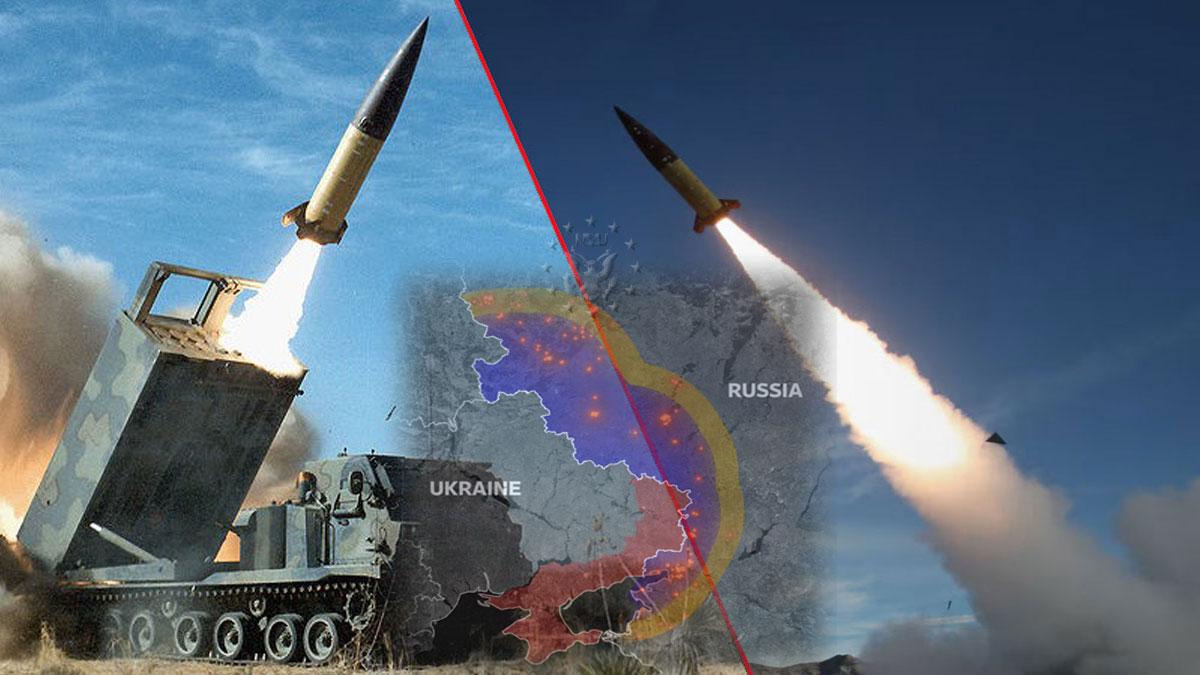
The absence of private diplomacy not only erodes trust but also removes the critical mechanisms needed to diffuse crises. A single misstep, a missile strike misinterpreted, an overzealous military commander, or a politician cornered by his own rhetoric could ignite an uncontrollable chain reaction. NATO’s increasingly reckless posture, from Biden’s authorization of ATACMS strikes deep inside Russia’s internationally recognized borders to France and the UK greenlighting Storm Shadow and SCALP missiles, is a case in point. Each move nudges us closer to the brink, daring Russia to respond while naively assuming it won’t.
But Russia has responded. The deployment of the hypersonic-ballistic Oreshnik missile, capable of carrying nuclear warheads, was no mere “combat test.” It was a calculated signal, a demonstration of Moscow’s resolve to defend its red lines with decisive force. The West’s strategy, built on the illusion of Russian hesitance, is a catastrophic miscalculation. Moscow has no illusions about what’s at stake, and its actions reflect a sobering acknowledgment of the existential threat posed by NATO’s provocations.
Unlike the Cold War, this is no longer a game of chess where careful strategy and mutual respect for red lines dictate moves. This is poker, played with nuclear chips, where bluffing and brinkmanship replace logic and restraint. The U.S. and NATO, emboldened by their own propaganda, are gambling that Russia won’t escalate. But Russia, rooted in a historical memory of existential defense, isn’t playing the West’s game, it’s prepared for survival.
History will not be kind to those who gamble with humanity’s future for the sake of their own political vanity. It’s time for the West to step back, not as an act of weakness, but as an acknowledgment of reality.
***
Sources: News Agency - Analysts - DiplNet
Read Also:

 English
 Arabic
 French
 Spanish
 Portuguese
 Deutsch
 Turkish
 Dutch
Dutch
 Italiano
 Russian
 Romaian
 Portuguese (Brazil)
 Greek
Greek