


 DONATIONS
 Worldwide Radio Stations
Could Iran shoot chemical weapons at Israel?
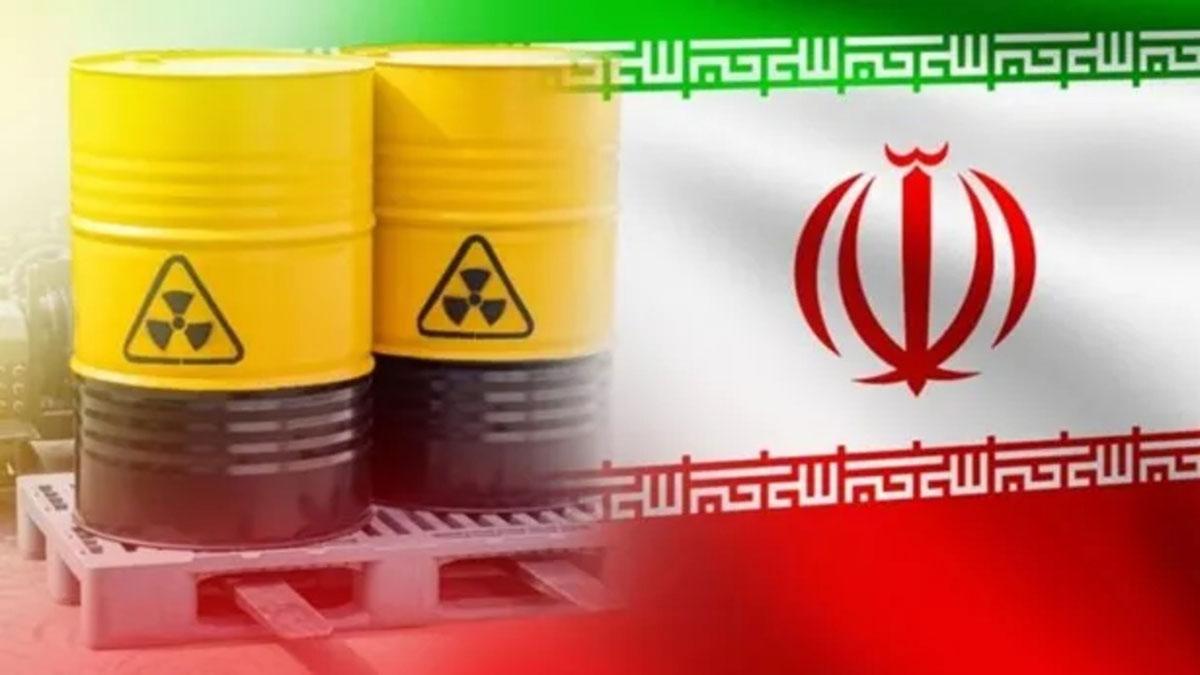
Chemical warheads require precise dispersal mechanisms, stable storage conditions, and specialized engineering to survive the extreme heat and pressure of ballistic missile flight.
Iran’s ability to fire chemical weapons at Israel is a question that blends capability, intent, and technical feasibility.
Iran signed the Chemical Weapons Convention in 1993 and ratified it in 1997, formally banning the development and use of chemical agents.
Despite this, U.S. intelligence assessments have long stated that Iran retains the industrial capacity, precursor chemicals, and technical expertise needed to restart chemical‑weapons production if it chose to.
Reports from the U.S. State Department and Defense Intelligence Agency note that Iran previously produced mustard gas and nerve agents during the Iran‑Iraq War, giving it historical experience in chemical‑weapons manufacturing.
The more complex issue is whether Iran could deliver such weapons to Israel.
Iran possesses one of the largest and most diverse missile arsenals in the Middle East, including the Shahab‑3, Sejjil, Emad, and Khorramshahr ballistic missiles, all with ranges between 1,000 and 2,000 kilometers—easily enough to reach Israeli territory.
It also fields cruise missiles such as the Soumar and Paveh, which fly at low altitude and could challenge radar detection.
In theory, any of these systems could be modified to carry a chemical payload.
However, delivering chemical agents effectively is far more difficult than attaching them to a missile.
Chemical warheads require precise dispersal mechanisms, stable storage conditions, and specialized engineering to survive the extreme heat and pressure of ballistic missile flight.
Historically, even advanced militaries have struggled to build reliable chemical‑warhead systems, and Iran has never demonstrated such a capability in testing or combat.
Israel, meanwhile, maintains one of the world’s most advanced multi‑layered air‑defense networks.
Arrow‑2 and Arrow‑3 intercept ballistic missiles outside the atmosphere, David’s Sling covers medium‑range threats, and Iron Dome handles rockets, drones, and short‑range fire.
During Iran’s unprecedented direct attack on Israel in April 2024, the Arrow system successfully intercepted multiple ballistic missiles, proving in real combat that Israel can stop high-speed threats long before they reach Israeli airspace.
Theoretically, Iran could attempt to fire chemical‑armed missiles at Israel, but practically, the obstacles are enormous: engineering challenges, international consequences, and Israel’s proven ability to intercept ballistic missiles at long range.
The scenario is not impossible, but it remains highly unlikely—and strategically self-destructive for Iran.
***

 Dutch
Dutch
 English
 Arabic
 French
 Spanish
 Portuguese
 Deutsch
 Turkish
 Italiano
 Russian
 Romaian
 Portuguese (Brazil)
 Greek
Greek