
 DONATIONS
 Worldwide Radio Stations
After Losing Syria, Iran Ponders Next Steps
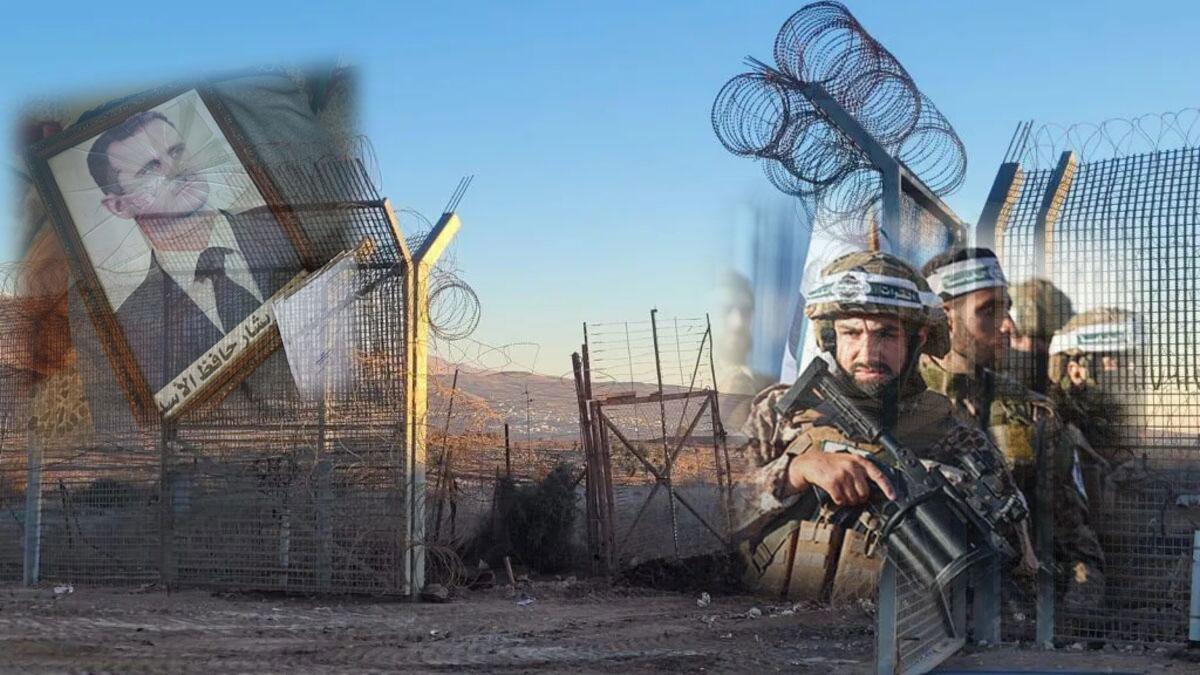
The fall of Bashar Assad’s regime in Syria will force Iran to make significant shifts in its military doctrine,
analysts told The Press Service of Israel
“This is going to force the Iranians to make serious compromises in the long run, because they are now more exposed in the region and they are more exposed internationally, and also because of the weakening economic situation and the isolation of the regime,” Dr. Meir Javedanfar, an Iran lecturer at Reichman University, told TPS-IL.
“But in the short run the Iranian regime is going to stick to its guns, it’s going to continue with its militancy towards the State of Israel. But very difficult questions remain for the regime, especially regarding the nuclear program for which it’s going to have to make painful decisions in the near future,” Javedanfar explained.
This is because Iran is “enriching at levels that are close to levels required to make a nuclear bomb,” Javedanfar said.
Furthermore, Iran is also concerned about the effect that the successful Syrian revolution could have domestically.
“The regime is worried about the fall of Assad setting a precedent for the people of Iran doing the same,” Javedanfar explained. “If Syria turns into a democracy then that would be an even more cause of concern for the regime because it would show that in the Middle East you can overthrow an authoritarian regime and replace it with a democracy,” Javedanfar said.
According to Ray Zimmt, a senior researcher at Tel Aviv University’s Institute for National Security Studies (INSS), the fall of Assad is part of an overall trend of Iran weakening, as Israel strikes it on its home territory and its proxies crumble one after the other.
“The Assad collapse is the last part of a series of very concerning developments for Iran, after losing Hamas in Gaza and witnessing devastating damage to Hezbollah and the recent Israeli attack on Iran,” Zimmt told TPS-IL.
“All of these developments have raised doubts about Iran’s ability to deter Israel,” he continued.
Syria, however, was of particularly great strategic importance to Iran, due to its role as a bridge for delivering weapons and ammunition from Iran to Hezbollah.
“Now, after the collapse of Assad, Iran’s ability to maintain its influence in Syria and to use Syria to provide Hezbollah with weapons and rehabilitate it has been significantly jeopardized,” Zimmt continued.
This is especially significant now, as Hezbollah is desperately trying to rehabilitate itself following the destruction of its leadership and much of its weapons capabilities at the hands of Israel.
Iran’s Options
These developments, however, do not mean that Iran won’t attempt to maintain its influence in Syria.
“We’ve seen reports even today that Iran has tried to establish communication links with rebels in Syria,” Zimmt said, but added that “there’s no doubt that Iran won’t be capable — at least in the near future — to maintain supply lines in Syria.”
“They can try to find other ways to assist Hezbollah but it won’t be easy due to Israeli determination to stop all weapons deliveries from Iran, and due to the fact that most border corridors are now dominated by the rebels,” Zimmt continued.
The Iranian policy vis a vis Israel, according to Zimmt, can be divided into four main pillars: Proxies, terrorism, missiles and drones, and nuclear.
The first three, according to Zimmt, have been used heavily in the past year of war, but were not sufficient to deter Israel from acting against Iran and its proxies.
This, according Zimmt, leaves the nuclear pillar as the only pillar left for Iran.
“There are more and more voices inside Iran calling to readapt the nuclear doctrine, saying it’s no longer sufficient to be satisfied with Iran’s position as a threshold state and that it should break out to nuclear,” Zimmt said.
But with President-elect Donald Trump due to return to the White House, any Iranian nuclear breakout strategy is very risky for Tehran.
“Currently there is no good option for Iran,” Zimmt explained. “It’s either to try to look for some sort of arrangement with the west concerning its nuclear program, or to go nuclear but take the risk of further escalation and even military confrontation with Israel.”
***
Sources: Media - Analysts

 French
 English
 Arabic
 Spanish
 Portuguese
 Deutsch
 Turkish
 Dutch
Dutch
 Italiano
 Russian
 Romaian
 Portuguese (Brazil)
 Greek
Greek