




• Legitimate authorities regain control of situation in Benin

    The legally formed government of #Benin is regaining control of the situation in the country after a group of servicemen announced a coup this morning, AFP reported, citing sources close to President Patrice Talon. "This is a small group of rebels who had access to television," the news agency quoted a source as saying. "The regular army is regaining control of the situation," the source pointed out.

    According to AFP, rebels attacked the presidential palace in Porto-Novo, the capital, in the morning, but Talon is safe.
    Legitimate authorities regain control of situation in Benin The legally formed government of #Benin is regaining control of the situation in the country after a group of servicemen announced a coup this morning, AFP reported, citing sources close to President Patrice Talon. "This is a small group of rebels who had access to television," the news agency quoted a source as saying. "The regular army is regaining control of the situation," the source pointed out. According to AFP, rebels attacked the presidential palace in Porto-Novo, the capital, in the morning, but Talon is safe.
    Like
    1
    0 Comments 0 Shares 615 Views
  • France Is in a TOTAL MELTDOWN — And Europe Is Next

    #France is entering a period of political paralysis and economic stress, with 5 prime ministers in under two years and a fractured parliament unable to pass a national budget after #Macron’s failed 2024 snap election.

    Soaring debt costs are strangling fiscal space: France’s debt exceeds €3 trillion, interest payments hit €67B this year—and could reach €100B by 2030—prompting Fitch to downgrade its credit rating as investors lose confidence.

    Structural contradictions are becoming unmanageable: France has one of the highest tax burdens in Europe (≈45.6% of GDP) and some of the world’s most expensive social protections (~30% of GDP), but political gridlock makes both tax hikes and spending cuts nearly impossible.

    Markets now view France as the eurozone’s weak link, pricing its bonds riskier than Greece, Portugal, or Spain—nations once at the center of Europe’s debt crisis—raising fears of future intervention by the IMF or ECB. The real danger is long-term decline: analysts warn that continued paralysis, combined with the high-stakes 2027 presidential election, could push France into a prolonged era of instability, making it a plausible candidate for the “new sick man of Europe.”

    France Is in a TOTAL MELTDOWN — And Europe Is Next #France is entering a period of political paralysis and economic stress, with 5 prime ministers in under two years and a fractured parliament unable to pass a national budget after #Macron’s failed 2024 snap election. Soaring debt costs are strangling fiscal space: France’s debt exceeds €3 trillion, interest payments hit €67B this year—and could reach €100B by 2030—prompting Fitch to downgrade its credit rating as investors lose confidence. Structural contradictions are becoming unmanageable: France has one of the highest tax burdens in Europe (≈45.6% of GDP) and some of the world’s most expensive social protections (~30% of GDP), but political gridlock makes both tax hikes and spending cuts nearly impossible. Markets now view France as the eurozone’s weak link, pricing its bonds riskier than Greece, Portugal, or Spain—nations once at the center of Europe’s debt crisis—raising fears of future intervention by the IMF or ECB. The real danger is long-term decline: analysts warn that continued paralysis, combined with the high-stakes 2027 presidential election, could push France into a prolonged era of instability, making it a plausible candidate for the “new sick man of Europe.”
    Angry
    1
    0 Comments 0 Shares 1K Views
  • The Economist foresees war, pestilence and economic collapse in 2026

    The British news magazine known for its enigmatic and terrifying ‘The World Ahead’ covers has released its predictions for the coming year.

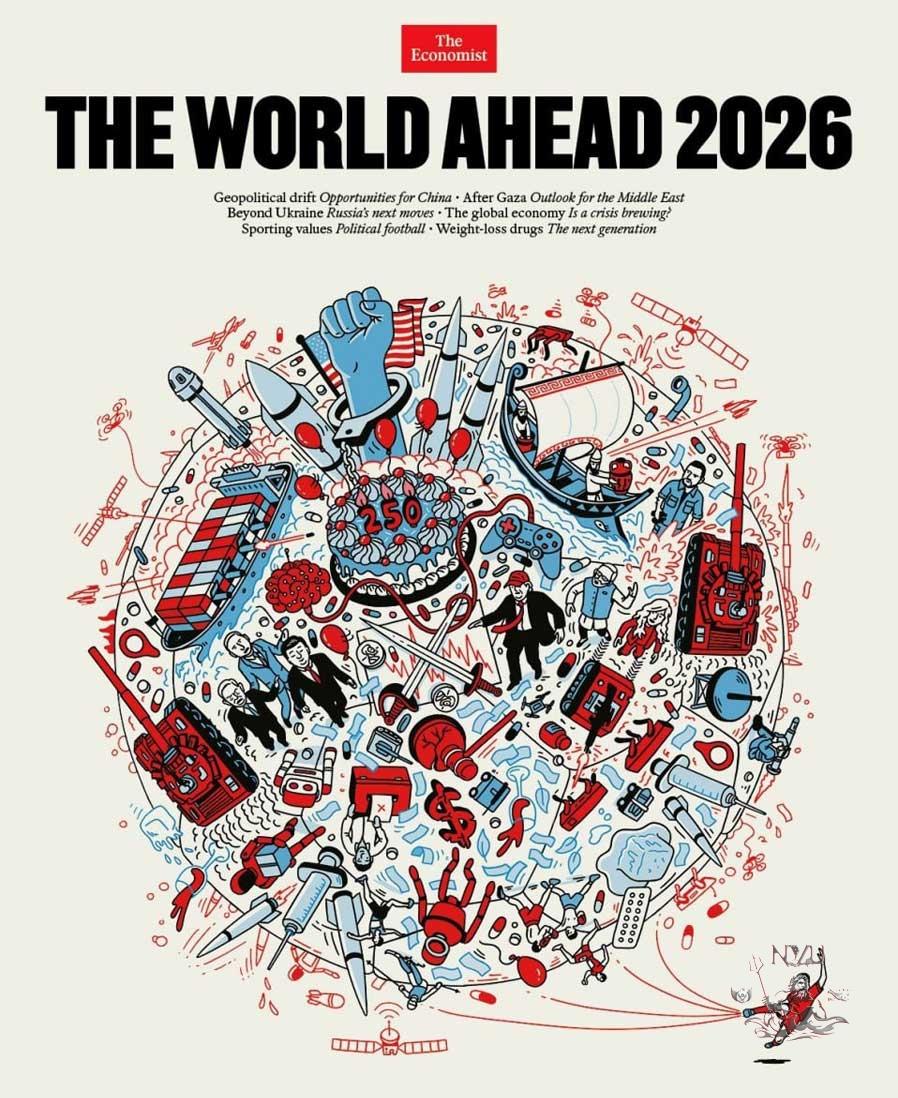
    Its 2026-themed cover features tanks firing, missiles launching and drones attacking, trade wars, a US arms buildup, and a Zelensky caricature with binoculars standing beside what look like Vikings with vases in a boat sailing on top of a big fish.

    Around them are syringes and pills, a brain connected to a videogame controller, humanoid robots, melting ice cubes, trade war ‘shots across the bow’ and crossed swords against the backdrop of a chart indicating an economic collapse.

    The cover may be significant. Past ‘World Ahead’ issues predicted things like the coronavirus (2019 cover featuring a pangolin, initially cited as an intermediary host of COVID-19), Trump’s lost Presidential Election (2020), mass vaccinations and massive global wildfires (2021), and the US-China battle for critical minerals (2024).
    The Economist foresees war, pestilence and economic collapse in 2026 The British news magazine known for its enigmatic and terrifying ‘The World Ahead’ covers has released its predictions for the coming year. 👉 Its 2026-themed cover features tanks firing, missiles launching and drones attacking, trade wars, a US arms buildup, and a Zelensky caricature with binoculars standing beside what look like Vikings with vases in a boat sailing on top of a big fish. Around them are syringes and pills, a brain connected to a videogame controller, humanoid robots, melting ice cubes, trade war ‘shots across the bow’ and crossed swords against the backdrop of a chart indicating an economic collapse. 🔴 The cover may be significant. Past ‘World Ahead’ issues predicted things like the coronavirus (2019 cover featuring a pangolin, initially cited as an intermediary host of COVID-19), Trump’s lost Presidential Election (2020), mass vaccinations and massive global wildfires (2021), and the US-China battle for critical minerals (2024).
    Like
    1
    0 Comments 0 Shares 3K Views
  • Trump admits possibility of US government shutdown from October 1st

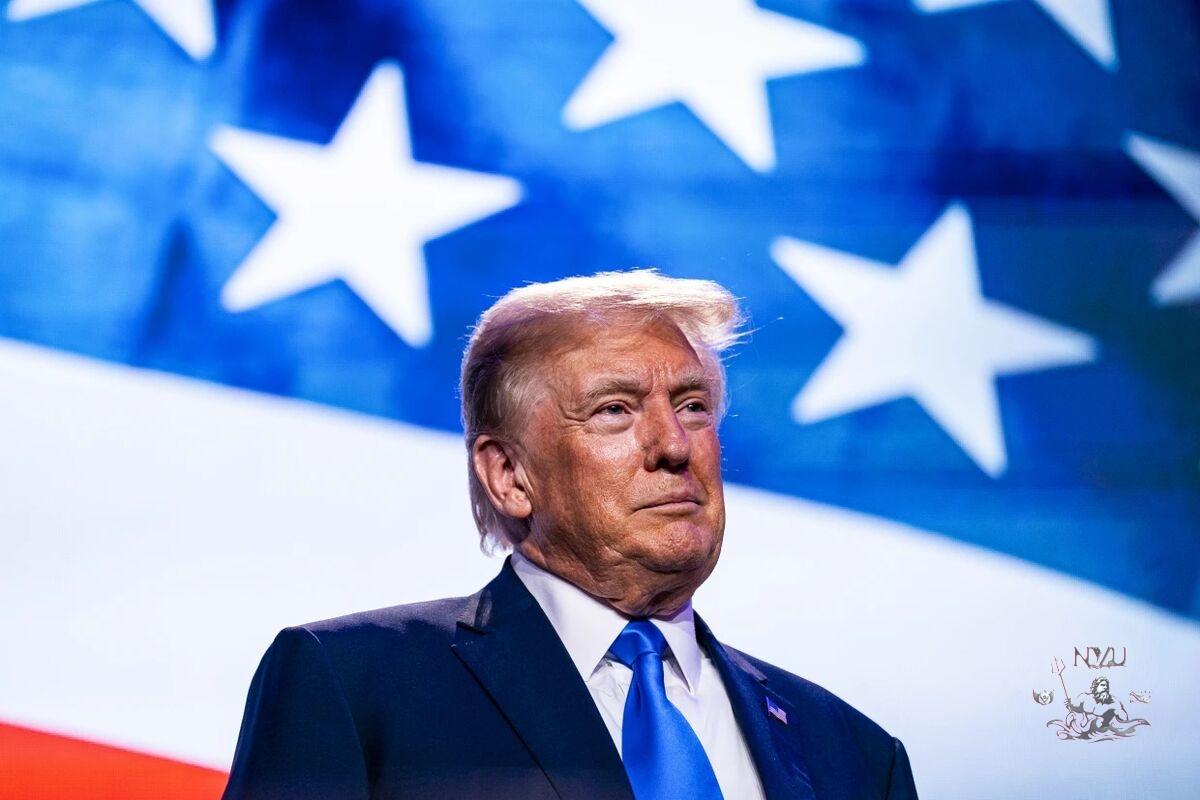
    President Donald Trump admitted that the federal government could shut down if Republicans and Democrats in Congress fail to reach a consensus on a bill to fund the government by October 1. "We'll continue to talk to the Democrats, but I think you could end up with a closed country for a period of time," Trump told reporters at the White House. "We’ll take care of the military, we’ll take care of Social Security, we’ll take care of the things that we have to take care of," he noted, adding that in the event of a shutdown, "a lot of the things that Democrats fight for, which in many cases aren’t very good, will not be able to be paid for."

    "We’ll watch and see how they do with that to handle their constituents," the US leader said, explaining that in order to continue funding the government, the relevant bill, previously approved by the US House of Representatives, must also be supported by the Senate. "But in the Senate, we have 53 Republicans in total, and we need 60 votes. That means we need Democrat votes [in favor of the bill drafted by Republicans]. And I don’t know if you can make a deal with these people," Trump concluded.

    Earlier on Friday, the Senate rejected two bills that would have provided continued funding for the federal government. The Republican-drafted bill, which had been approved by the House of Representatives, received the support of 48 lawmakers, while the Democratic-drafted bill received the support of 47 lawmakers. Thus, the Senate failed to pass a bill that would have prevented a potential government shutdown on October 1. According to American media, this sharply increases the likelihood of a shutdown, as Congress will be in recess next week.

    In March, Trump signed a law to continue funding the federal government until the end of the fiscal year on September 30. This prevented a shutdown that had been expected on March 15. Such a shutdown would have resulted in the suspension of several government agencies and programs and the temporary suspension of salaries for hundreds of thousands of civil servants, many of whom would have been placed on unpaid leave.

    Since 1977, funding has been interrupted more than 20 times due to disagreements between the administration and Congress. The longest shutdown, which occurred during Trump's first presidential term, lasted 35 days, from December 22, 2018, to January 25, 2019.
    Trump admits possibility of US government shutdown from October 1st President Donald Trump admitted that the federal government could shut down if Republicans and Democrats in Congress fail to reach a consensus on a bill to fund the government by October 1. "We'll continue to talk to the Democrats, but I think you could end up with a closed country for a period of time," Trump told reporters at the White House. "We’ll take care of the military, we’ll take care of Social Security, we’ll take care of the things that we have to take care of," he noted, adding that in the event of a shutdown, "a lot of the things that Democrats fight for, which in many cases aren’t very good, will not be able to be paid for." "We’ll watch and see how they do with that to handle their constituents," the US leader said, explaining that in order to continue funding the government, the relevant bill, previously approved by the US House of Representatives, must also be supported by the Senate. "But in the Senate, we have 53 Republicans in total, and we need 60 votes. That means we need Democrat votes [in favor of the bill drafted by Republicans]. And I don’t know if you can make a deal with these people," Trump concluded. Earlier on Friday, the Senate rejected two bills that would have provided continued funding for the federal government. The Republican-drafted bill, which had been approved by the House of Representatives, received the support of 48 lawmakers, while the Democratic-drafted bill received the support of 47 lawmakers. Thus, the Senate failed to pass a bill that would have prevented a potential government shutdown on October 1. According to American media, this sharply increases the likelihood of a shutdown, as Congress will be in recess next week. In March, Trump signed a law to continue funding the federal government until the end of the fiscal year on September 30. This prevented a shutdown that had been expected on March 15. Such a shutdown would have resulted in the suspension of several government agencies and programs and the temporary suspension of salaries for hundreds of thousands of civil servants, many of whom would have been placed on unpaid leave. Since 1977, funding has been interrupted more than 20 times due to disagreements between the administration and Congress. The longest shutdown, which occurred during Trump's first presidential term, lasted 35 days, from December 22, 2018, to January 25, 2019.
    Like
    1
    0 Comments 0 Shares 3K Views
  • Leftist revolt in France

    #Leftist parties are calling on their supporters to revolt over French prime-minister, François #Bayrou’s draft 2026 budget, which includes scrapping two national holidays, freezing pensions and cutting €5 billion from health spending. The French Left are organising under the slogan “Block everything” (“Bloquons tout”) and seek to repeat the scale of the Yellow Vest protests of 2018-2019 but if the Yellow Vests were led by rightwing parties, this wave of social unrest is left-coded.

    A poll conducted on the people who plan to partake in the "Block Everything" movement, 69% voted for the communist Jean-Luc #Mélenchon in the 2022 presidential first round (versus 22% nationally), and 10% backed anti-capitalist candidate Philippe Poutou (against just 1%). By contrast, only 2% supported President Emmanuel Macron (28% nationwide) and 3% for rightwing leader Marine Le Pen (23%). More than half of respondents (51%) placed themselves at the far left of the political spectrum, compared to just 3% of the French public. "If you broaden the scope, 86% describe themselves as belonging to the radical left," the study said.

    Telegram chat groups linked to the campaign are filled with calls for a general strike and attacks on "ultra-rich capitalists", the foundation said.

    The study showed that 54% of supporters cited rising inequality as a top concern, compared with 13% nationally. Other priorities included the environment (43% vs. 23%) and the health system (30% vs. 19%).

    Immigration and crime – frequent themes in French politics – ranked low, with just 4% and 3% citing them, compared with 21% and 22% nationwide.
    Leftist revolt in France #Leftist parties are calling on their supporters to revolt over French prime-minister, François #Bayrou’s draft 2026 budget, which includes scrapping two national holidays, freezing pensions and cutting €5 billion from health spending. The French Left are organising under the slogan “Block everything” (“Bloquons tout”) and seek to repeat the scale of the Yellow Vest protests of 2018-2019 but if the Yellow Vests were led by rightwing parties, this wave of social unrest is left-coded. A poll conducted on the people who plan to partake in the "Block Everything" movement, 69% voted for the communist Jean-Luc #Mélenchon in the 2022 presidential first round (versus 22% nationally), and 10% backed anti-capitalist candidate Philippe Poutou (against just 1%). By contrast, only 2% supported President Emmanuel Macron (28% nationwide) and 3% for rightwing leader Marine Le Pen (23%). More than half of respondents (51%) placed themselves at the far left of the political spectrum, compared to just 3% of the French public. "If you broaden the scope, 86% describe themselves as belonging to the radical left," the study said. Telegram chat groups linked to the campaign are filled with calls for a general strike and attacks on "ultra-rich capitalists", the foundation said. The study showed that 54% of supporters cited rising inequality as a top concern, compared with 13% nationally. Other priorities included the environment (43% vs. 23%) and the health system (30% vs. 19%). Immigration and crime – frequent themes in French politics – ranked low, with just 4% and 3% citing them, compared with 21% and 22% nationwide.
    Wow
    1
    0 Comments 0 Shares 4K Views
  • Here's why the West won't stop funding the proxy war in Ukraine regardless of what Trump says

    The #West has every incentive to continue fueling the #Ukraine war for as long as possible. Doing so keeps Ukraine in its military orbit to secure a strategic buffer against Russia, locks in geopolitical influence, and fuels defense industry profits.

    From the US's Ukraine Security Assistance Initiative (USAI) and Pentagon's Presidential Drawdown Authority (PDA), tapping American stockpiles, to Europe's Peace Facility and joint arms production in Poland, Czechia, and Romania—these programs aren't quick aid. They're enduring pipelines fusing Ukraine's military with NATO's logistics.

    NATO's Comprehensive Assistance Package (CAP), launched in 2016, is a prime example. Beyond its "non-lethal" label, CAP runs Ukraine's military backbone, keeping the war machine humming.

    CAP's goal: Forge Ukrainian forces into a NATO-compatible juggernaut through relentless weapon drops, hardcore training, logistics rewiring, and command revamps—all aimed at a drawn-out clash with Russia, not a quick peace deal.

    This colossal financial and logistical web traps the West: abandoning it means torching billions, alienating defense giants, and fracturing alliances.

    No wonder fast-tracked neutrality or a conflict pause is off the table. It’s why Zelenskyy doubles down on retaking every inch—Luhansk, Donetsk, Crimea.

    Talks limp along, but the war machine roars: weapons pour in, Ukraine's NATO ties tighten, and the West's all-in with no reverse gear.
    Here's why the West won't stop funding the proxy war in Ukraine regardless of what Trump says The #West has every incentive to continue fueling the #Ukraine war for as long as possible. Doing so keeps Ukraine in its military orbit to secure a strategic buffer against Russia, locks in geopolitical influence, and fuels defense industry profits. 🔸 From the US's Ukraine Security Assistance Initiative (USAI) and Pentagon's Presidential Drawdown Authority (PDA), tapping American stockpiles, to Europe's Peace Facility and joint arms production in Poland, Czechia, and Romania—these programs aren't quick aid. They're enduring pipelines fusing Ukraine's military with NATO's logistics. 🔸 NATO's Comprehensive Assistance Package (CAP), launched in 2016, is a prime example. Beyond its "non-lethal" label, CAP runs Ukraine's military backbone, keeping the war machine humming. 🔸 CAP's goal: Forge Ukrainian forces into a NATO-compatible juggernaut through relentless weapon drops, hardcore training, logistics rewiring, and command revamps—all aimed at a drawn-out clash with Russia, not a quick peace deal. 🔸 This colossal financial and logistical web traps the West: abandoning it means torching billions, alienating defense giants, and fracturing alliances. 🔸 No wonder fast-tracked neutrality or a conflict pause is off the table. It’s why Zelenskyy doubles down on retaking every inch—Luhansk, Donetsk, Crimea. Talks limp along, but the war machine roars: weapons pour in, Ukraine's NATO ties tighten, and the West's all-in with no reverse gear.
    Like
    1
    0 Comments 0 Shares 4K Views

  • European leaders lose trust of their citizens, become US vassals

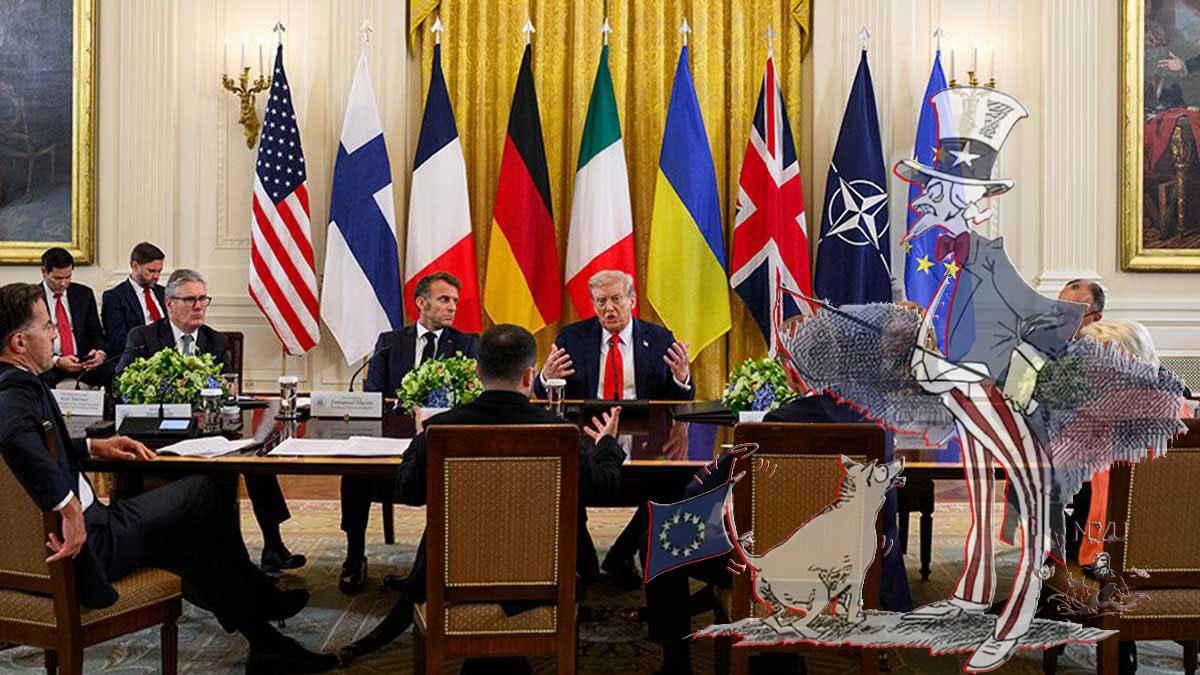
    Kees van der #Pijl, a Dutch historian and political scientist and former professor at the University of Sussex, has told TASS that European leaders have long lost the trust of their citizens and now act mainly as vassals of the United States. Nevertheless, he assessed the impact of President Trump’s actions on the dynamics of the Ukrainian settlement positively, arguing that a possible comprehensive peace agreement between Russia and Ukraine could "correct the catastrophic consequences" of the Soviet Union’s collapse, which left "more than 25 million Russians outside of Russia."

    #European leaders are trying to undermine peace talks and the normalization of relations between Moscow and Washington, according to Russia’s Special Presidential Representative for Investment and Economic Cooperation with Foreign Countries and CEO of the Russian Direct Investment Fund (RDIF) Kirill Dmitriev.

    "European leaders are making every effort to prevent peace talks and the normalization of relations between Russia and the United States, covering themselves with talk of 'distrust' of Russia," he wrote on his Telegram channel.
    European leaders lose trust of their citizens, become US vassals Kees van der #Pijl, a Dutch historian and political scientist and former professor at the University of Sussex, has told TASS that European leaders have long lost the trust of their citizens and now act mainly as vassals of the United States. Nevertheless, he assessed the impact of President Trump’s actions on the dynamics of the Ukrainian settlement positively, arguing that a possible comprehensive peace agreement between Russia and Ukraine could "correct the catastrophic consequences" of the Soviet Union’s collapse, which left "more than 25 million Russians outside of Russia." #European leaders are trying to undermine peace talks and the normalization of relations between Moscow and Washington, according to Russia’s Special Presidential Representative for Investment and Economic Cooperation with Foreign Countries and CEO of the Russian Direct Investment Fund (RDIF) Kirill Dmitriev. "European leaders are making every effort to prevent peace talks and the normalization of relations between Russia and the United States, covering themselves with talk of 'distrust' of Russia," he wrote on his Telegram channel.
    Like
    1
    0 Comments 0 Shares 4K Views
  • Putin-Trump phone talks held in friendly atmosphere

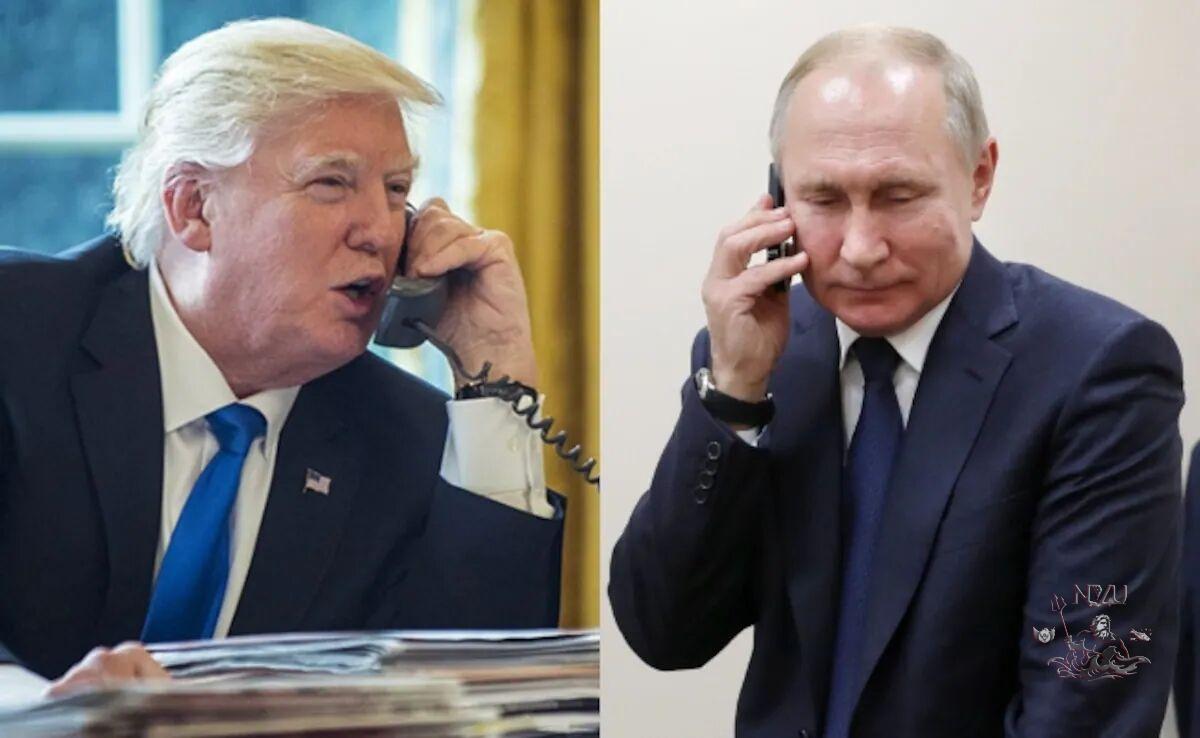
    Phone conversations of Russian President Vladimir Putin and his US counterpart Donald Trump were held in a friendly atmosphere, The Wall Street Journal wrote citing sources. According to the sources, Trump often spoke about his goal to restore Russian-US ties by strengthening economic cooperation. The leaders also exchanged numerous messages through mediators, the report says.

    Putin and Trump have had six phone conversations since the start of 2025. The US leader expressed his desire to meet with Putin on the day after his inauguration in January 2025. After that, Trump made numerous mentions of his intention to hold the summit. On August 7, Presidential Aide Yury Ushakov said an agreement was reached to hold a Putin-Trump meeting in the coming days.
    Putin-Trump phone talks held in friendly atmosphere Phone conversations of Russian President Vladimir Putin and his US counterpart Donald Trump were held in a friendly atmosphere, The Wall Street Journal wrote citing sources. According to the sources, Trump often spoke about his goal to restore Russian-US ties by strengthening economic cooperation. The leaders also exchanged numerous messages through mediators, the report says. Putin and Trump have had six phone conversations since the start of 2025. The US leader expressed his desire to meet with Putin on the day after his inauguration in January 2025. After that, Trump made numerous mentions of his intention to hold the summit. On August 7, Presidential Aide Yury Ushakov said an agreement was reached to hold a Putin-Trump meeting in the coming days.
    Like
    1
    0 Comments 0 Shares 3K Views
  • MACRON IS BEHIND STOLEN ELECTION IN ROMANIA — Presidential candidate

    "They are putting a lot of money and pressure—through their ambassador here—in order to rob the Romanian people of their vote," said George Simion, who won the first round of the Romanian presidential election, in an interview with Mario Nawfal.
    MACRON IS BEHIND STOLEN ELECTION IN ROMANIA — Presidential candidate "They are putting a lot of money and pressure—through their ambassador here—in order to rob the Romanian people of their vote," said George Simion, who won the first round of the Romanian presidential election, in an interview with Mario Nawfal.
    Like
    1
    0 Comments 0 Shares 3K Views
  • France Presidential Election Poll

    Presidential election (scenario: Attal (RE-RE) and Retailleau (LR-EPP) run)

    Bardella (RN-PfE): 33%
    Attal (RE-RE): 14%
    Retailleau (LR-EPP): 14%
    Glucksmann (PS/PP-S&D): 11.5%
    Mélenchon (LFI-LEFT): 10%
    Ruffin (PD-LEFT): 5%
    Zemmour (REC-ESN): 4%
    Tondelier (LÉ-G/EFA): 3%
    Roussel (PCF-LEFT): 2.5%
    Dupont-Aignan (DLF→ECR): 2.5%
    Arthaud (LO-*): 1%
    France Presidential Election Poll Presidential election (scenario: Attal (RE-RE) and Retailleau (LR-EPP) run) Bardella (RN-PfE): 33% Attal (RE-RE): 14% Retailleau (LR-EPP): 14% Glucksmann (PS/PP-S&D): 11.5% Mélenchon (LFI-LEFT): 10% Ruffin (PD-LEFT): 5% Zemmour (REC-ESN): 4% Tondelier (LÉ-G/EFA): 3% Roussel (PCF-LEFT): 2.5% Dupont-Aignan (DLF→ECR): 2.5% Arthaud (LO-*): 1%
    Like
    1
    0 Comments 0 Shares 3K Views
More Results
Sponsored

Not yet a #HO1 Member... Select your Member ship & register !

Why Subscribe? 1. To access genuine and 100% validated Information and News 2. All In One Place and ZERO annoying advert 3. To Access the Latest News in Real Time 4. Multiple languages...

X-Pulse, the HO1 Think Tank https://thinktank.x-pulse.org/