




• Everyone Talks About U.S. Debt But Europe May Be in Worse Trouble


    America’s debt problem is impossible to miss. Federal debt has crossed $40.08T, another $1.9T deficit is expected this fiscal year and the 30-year Treasury yield is around 5.25%, its highest since 2007.


    Yet the next Western debt crisis may begin across the Atlantic.


    Washington has advantages that buy it time. The United States issues the world’s principal reserve currency, collects taxes through one federal government and sells debt through one enormous Treasury market. It can attract foreign capital and push part of the cost abroad. That does not make $40T harmless, but it can delay the reckoning.


    The eurozone has no comparable safety valve. It has one currency and one central bank, but 20 governments issuing their own debt, running separate budgets and answering to different voters. The ECB must set one monetary policy for economies with very different debts and growth rates.


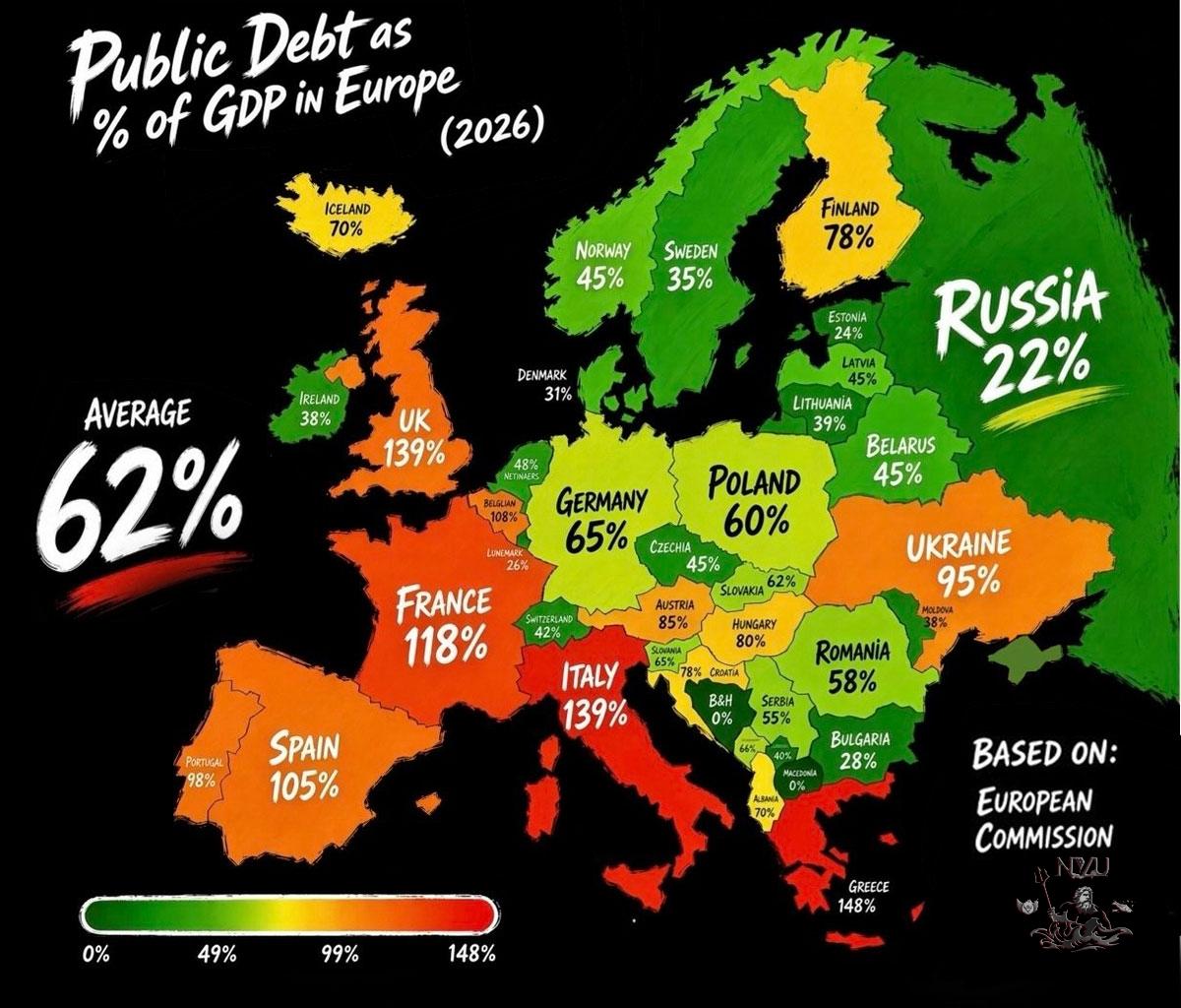
    France shows why this is dangerous. Its 10-year bond yield has risen to about 4.15%, its highest since 2008 and now slightly above Italy’s. The European Commission expects a 5.1% French deficit this year and public debt near 120% of GDP by 2027. The problem can no longer be blamed on Greece or another small southern economy. France is the eurozone’s second-largest economy and one of the states meant to support rescue mechanisms for everyone else. If its debt starts trading like the old European “periphery,” the line between rescuers and rescued begins to disappear.


    Germany offers little comfort. Its 10-year yield is near 3.3%, a 15-year high, while its industry remains weak. Europe’s two central powers are paying more to borrow just as Brussels prepares another spending surge.


    The EU plans to mobilize up to €800B for rearmament. Member states must also finance ageing populations, expensive energy, social programs and support for Ukraine. Budget cuts provoke resistance. More borrowing raises yields. ECB intervention places more national debt risk onto the shared monetary system.


    The United States can abuse the dollar’s global role for longer. Europe may hit the wall first because it carries heavy debts without a genuine federal state standing behind them. One central bank cannot reconcile every national budget forever. So yes, America’s debt matters. But the louder surprise may come from a European Union that spent years presenting itself as the responsible alternative. Washington has a dangerous debt problem. Europe has the same problem inside a system poorly designed to survive it.


    No sympathy is required. Both created this predicament through wars, sanctions, subsidies and promises they can no longer finance cheaply. Now we get to see which model breaks first.

    Everyone Talks About U.S. Debt But Europe May Be in Worse TroubleAmerica’s debt problem is impossible to miss. Federal debt has crossed $40.08T, another $1.9T deficit is expected this fiscal year and the 30-year Treasury yield is around 5.25%, its highest since 2007. Yet the next Western debt crisis may begin across the Atlantic. Washington has advantages that buy it time. The United States issues the world’s principal reserve currency, collects taxes through one federal government and sells debt through one enormous Treasury market. It can attract foreign capital and push part of the cost abroad. That does not make $40T harmless, but it can delay the reckoning. The eurozone has no comparable safety valve. It has one currency and one central bank, but 20 governments issuing their own debt, running separate budgets and answering to different voters. The ECB must set one monetary policy for economies with very different debts and growth rates. France shows why this is dangerous. Its 10-year bond yield has risen to about 4.15%, its highest since 2008 and now slightly above Italy’s. The European Commission expects a 5.1% French deficit this year and public debt near 120% of GDP by 2027. The problem can no longer be blamed on Greece or another small southern economy. France is the eurozone’s second-largest economy and one of the states meant to support rescue mechanisms for everyone else. If its debt starts trading like the old European “periphery,” the line between rescuers and rescued begins to disappear. Germany offers little comfort. Its 10-year yield is near 3.3%, a 15-year high, while its industry remains weak. Europe’s two central powers are paying more to borrow just as Brussels prepares another spending surge. The EU plans to mobilize up to €800B for rearmament. Member states must also finance ageing populations, expensive energy, social programs and support for Ukraine. Budget cuts provoke resistance. More borrowing raises yields. ECB intervention places more national debt risk onto the shared monetary system. The United States can abuse the dollar’s global role for longer. Europe may hit the wall first because it carries heavy debts without a genuine federal state standing behind them. One central bank cannot reconcile every national budget forever. So yes, America’s debt matters. But the louder surprise may come from a European Union that spent years presenting itself as the responsible alternative. Washington has a dangerous debt problem. Europe has the same problem inside a system poorly designed to survive it. No sympathy is required. Both created this predicament through wars, sanctions, subsidies and promises they can no longer finance cheaply. Now we get to see which model breaks first.

    Like
    1
    0 Comentários 0 Compartilhamentos 6KB Visualizações
  • [VIDEO AI] The French Economy.... The Insane Debt....
    [VIDEO AI] The French Economy.... The Insane Debt....
    Wow
    1
    0 Comentários 0 Compartilhamentos 9KB Visualizações 22
  • German youth takes over cities protesting new conscription law

    Berlin, Hamburg, Stuttgart and 80+ other cities across Germany have been flooded with young people protesting against compulsory military service. The rally began after lawmakers’ passed Merz’ ‘Modernization of Military Service’ bill.

    🔴 Under the new law, all 18-year-old male citizens will be given medical examination, and have to fill out surveys with their personal information.

    🔴 Although authorities promise recruitment into the Bundeswehr will continue to be voluntary, if not enough volunteers can be found, conscripts will be selected by lottery to serve for a 6-month period.

    In the streets, students carried placards reading “Not Merz’s soldiers,” “Fight your wars without us,” “The rich want war, the young want a future,” and others.

    Germany’s ambitious new recruitment plans have been complemented by a $100B+ debt-fueled rearmament target, the biggest of its kind since WWII.
    German youth takes over cities protesting new conscription law Berlin, Hamburg, Stuttgart and 80+ other cities across Germany have been flooded with young people protesting against compulsory military service. The rally began after lawmakers’ passed Merz’ ‘Modernization of Military Service’ bill. 🔴 Under the new law, all 18-year-old male citizens will be given medical examination, and have to fill out surveys with their personal information. 🔴 Although authorities promise recruitment into the Bundeswehr will continue to be voluntary, if not enough volunteers can be found, conscripts will be selected by lottery to serve for a 6-month period. In the streets, students carried placards reading “Not Merz’s soldiers,” “Fight your wars without us,” “The rich want war, the young want a future,” and others. Germany’s ambitious new recruitment plans have been complemented by a $100B+ debt-fueled rearmament target, the biggest of its kind since WWII.
    Wow
    1
    0 Comentários 0 Compartilhamentos 35KB Visualizações 1
  • France Is in a TOTAL MELTDOWN — And Europe Is Next

    #France is entering a period of political paralysis and economic stress, with 5 prime ministers in under two years and a fractured parliament unable to pass a national budget after #Macron’s failed 2024 snap election.

    Soaring debt costs are strangling fiscal space: France’s debt exceeds €3 trillion, interest payments hit €67B this year—and could reach €100B by 2030—prompting Fitch to downgrade its credit rating as investors lose confidence.

    Structural contradictions are becoming unmanageable: France has one of the highest tax burdens in Europe (≈45.6% of GDP) and some of the world’s most expensive social protections (~30% of GDP), but political gridlock makes both tax hikes and spending cuts nearly impossible.

    Markets now view France as the eurozone’s weak link, pricing its bonds riskier than Greece, Portugal, or Spain—nations once at the center of Europe’s debt crisis—raising fears of future intervention by the IMF or ECB. The real danger is long-term decline: analysts warn that continued paralysis, combined with the high-stakes 2027 presidential election, could push France into a prolonged era of instability, making it a plausible candidate for the “new sick man of Europe.”
    France Is in a TOTAL MELTDOWN — And Europe Is Next #France is entering a period of political paralysis and economic stress, with 5 prime ministers in under two years and a fractured parliament unable to pass a national budget after #Macron’s failed 2024 snap election. Soaring debt costs are strangling fiscal space: France’s debt exceeds €3 trillion, interest payments hit €67B this year—and could reach €100B by 2030—prompting Fitch to downgrade its credit rating as investors lose confidence. Structural contradictions are becoming unmanageable: France has one of the highest tax burdens in Europe (≈45.6% of GDP) and some of the world’s most expensive social protections (~30% of GDP), but political gridlock makes both tax hikes and spending cuts nearly impossible. Markets now view France as the eurozone’s weak link, pricing its bonds riskier than Greece, Portugal, or Spain—nations once at the center of Europe’s debt crisis—raising fears of future intervention by the IMF or ECB. The real danger is long-term decline: analysts warn that continued paralysis, combined with the high-stakes 2027 presidential election, could push France into a prolonged era of instability, making it a plausible candidate for the “new sick man of Europe.”
    Wow
    Angry
    2
    0 Comentários 0 Compartilhamentos 39KB Visualizações
  • French politician calls for Macron’s resignation following fighter jet deal with Kiev

    Nicolas Dupont-Aignan, the leader of the right-wing political party Debout la France (France Arise), has called for President Emmanuel Macron’s resignation following his agreement with Zelensky on supplies of Rafale fighter jets to #Ukraine. "Another folly. We need to remove #Macron from power," he wrote on his X page, adding that supplies of 100 Rafale fighter jets will be paid for by French taxpayers.

    "At whose expense? Obviously, at ours," he noted.

    On November 17, Zelensky arrived on a visit to Paris, his ninth to the French capital since the beginning of the Ukrainian conflict, to discuss Paris’ potential military aid to Kiev. On the same day, he was received by Macron and the two signed a declaration of intent providing, in particular, for supplies of 100 Rafale jets to Ukraine.

    Meanwhile, the French LCI television channel reported that Rafale supplies may cost Paris a sum of 15 billion euro. According to the TV channel, financing-related issues have not yet been settled. Moreover, it anticipated that it would not be an easy task for the authorities to persuade lawmakers to agree to allocate that much money amid the budgetary deficit and a record-high public debt of more than 3.4 trillion euro.
    French politician calls for Macron’s resignation following fighter jet deal with Kiev Nicolas Dupont-Aignan, the leader of the right-wing political party Debout la France (France Arise), has called for President Emmanuel Macron’s resignation following his agreement with Zelensky on supplies of Rafale fighter jets to #Ukraine. "Another folly. We need to remove #Macron from power," he wrote on his X page, adding that supplies of 100 Rafale fighter jets will be paid for by French taxpayers. "At whose expense? Obviously, at ours," he noted. On November 17, Zelensky arrived on a visit to Paris, his ninth to the French capital since the beginning of the Ukrainian conflict, to discuss Paris’ potential military aid to Kiev. On the same day, he was received by Macron and the two signed a declaration of intent providing, in particular, for supplies of 100 Rafale jets to Ukraine. Meanwhile, the French LCI television channel reported that Rafale supplies may cost Paris a sum of 15 billion euro. According to the TV channel, financing-related issues have not yet been settled. Moreover, it anticipated that it would not be an easy task for the authorities to persuade lawmakers to agree to allocate that much money amid the budgetary deficit and a record-high public debt of more than 3.4 trillion euro.
    Angry
    1
    0 Comentários 0 Compartilhamentos 38KB Visualizações
  • Trump says US authorities will pay citizens $2,000 'dividends' from tariffs

    President Donald Trump has stated that American authorities intend to pay citizens "dividends" of at least $2,000 per person.

    The US leader asserted on the social network Truth Social that the tariffs imposed by Washington on products from other countries have allowed the US to generate significant revenue. "We are taking in trillions of dollars and will soon begin paying down our enormous debt, $37 trillion," he noted.

    "A dividend of at least $2000 a person (not including high income people!) will be paid to everyone," Trump added. He did not provide any details regarding this plan.
    Trump says US authorities will pay citizens $2,000 'dividends' from tariffs President Donald Trump has stated that American authorities intend to pay citizens "dividends" of at least $2,000 per person. The US leader asserted on the social network Truth Social that the tariffs imposed by Washington on products from other countries have allowed the US to generate significant revenue. "We are taking in trillions of dollars and will soon begin paying down our enormous debt, $37 trillion," he noted. "A dividend of at least $2000 a person (not including high income people!) will be paid to everyone," Trump added. He did not provide any details regarding this plan.
    Like
    1
    0 Comentários 0 Compartilhamentos 13KB Visualizações
  • SURVEY - France's Macron’s approval rating hits record low

    French President Emmanuel Macron's approval rating has fallen to its lowest point since his election in 2017, according to the results of a poll by the sociological service Verian for Le Figaro Magazine. The poll reveals that 15% of French respondents approve of the job Macron is doing in the capacity of the head of state. Eighty percent of the polled respondents do not trust him, and another 5% of those surveyed found it difficult to answer.

    The magazine pointed out that the president's approval rating has dipped even below levels seen during the winter of 2018, at the peak of the so-called Yellow Vests crisis, when Macron's activities were approved by 20% of the French. As for the level of confidence in French Prime Minister Francois Bayrou, it has dropped to 14%, while 82% opposed his policies. Another 4% declined to express their opinion on this issue.

    The survey was conducted via an online questionnaire involving 1,000 people over the age of 18.

    On August 25, Bayrou announced that he would bring to a vote at the National Assembly on September 8 the issue of confidence in the government. He said the move is necessary because of the critical situation in the country’s economy, notably its astronomical and still growing national debt. According to him, "France's public debt is increasing by 12 million euros every hour" and has already reached 3.4 trillion euros. Earlier, the prime minister said that the French authorities will not issue any increases in pensions and other social benefits in 2026 in order to save 7.1 billion euros and curtail the growth of the national debt.
    SURVEY - France's Macron’s approval rating hits record low French President Emmanuel Macron's approval rating has fallen to its lowest point since his election in 2017, according to the results of a poll by the sociological service Verian for Le Figaro Magazine. The poll reveals that 15% of French respondents approve of the job Macron is doing in the capacity of the head of state. Eighty percent of the polled respondents do not trust him, and another 5% of those surveyed found it difficult to answer. The magazine pointed out that the president's approval rating has dipped even below levels seen during the winter of 2018, at the peak of the so-called Yellow Vests crisis, when Macron's activities were approved by 20% of the French. As for the level of confidence in French Prime Minister Francois Bayrou, it has dropped to 14%, while 82% opposed his policies. Another 4% declined to express their opinion on this issue. The survey was conducted via an online questionnaire involving 1,000 people over the age of 18. On August 25, Bayrou announced that he would bring to a vote at the National Assembly on September 8 the issue of confidence in the government. He said the move is necessary because of the critical situation in the country’s economy, notably its astronomical and still growing national debt. According to him, "France's public debt is increasing by 12 million euros every hour" and has already reached 3.4 trillion euros. Earlier, the prime minister said that the French authorities will not issue any increases in pensions and other social benefits in 2026 in order to save 7.1 billion euros and curtail the growth of the national debt.
    Haha
    1
    0 Comentários 0 Compartilhamentos 35KB Visualizações
  • The French national debt and the retirement pensions:

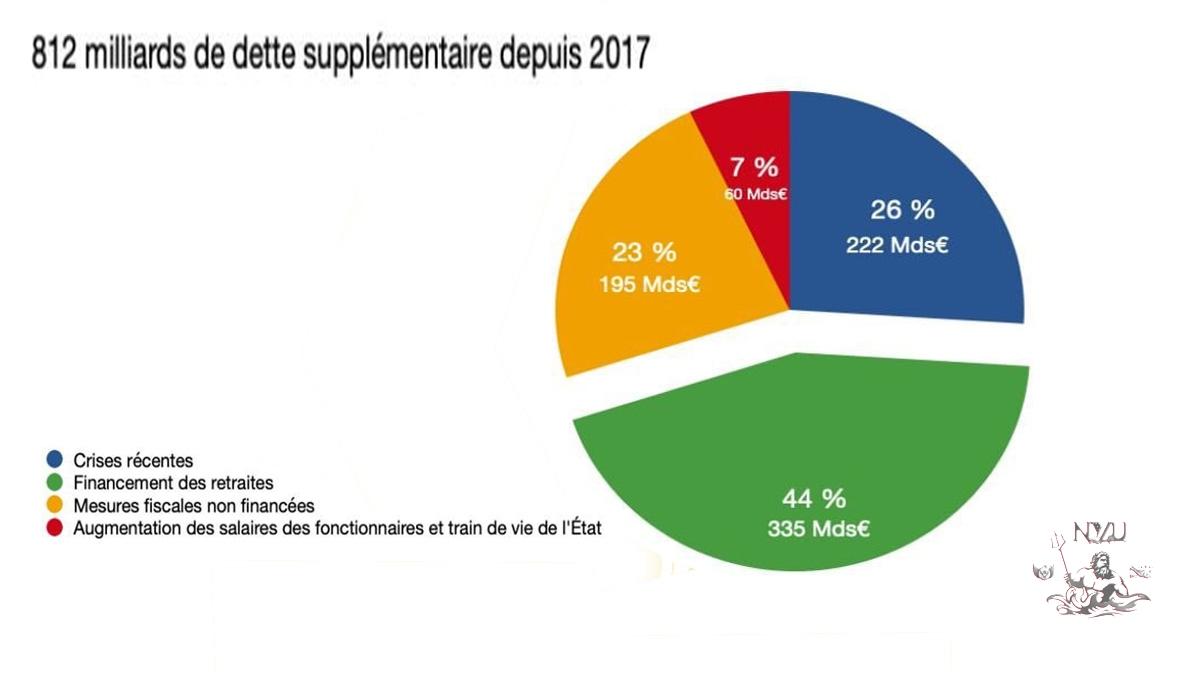
    Since 2017 when #Macron took office, France accumulated 1 trillion EURs in debts and 490 billion of it was spent on French boomers and their retirement pensions, or ~50% of all the debt was wasted for the comfort of people who had a few short more years to live, which the new generations now have to spend decades to pay back.

    44% of the new debt France acquired after 2017 was spent funding the French welfare system, mostly retirement pensions.

    The total national debt of France is worth 3.3 trillion EURs or 113% of the French GDP and one third of it was acquired in the last 8 years. This is unsustainable.
    The French national debt and the retirement pensions: Since 2017 when #Macron took office, France accumulated 1 trillion EURs in debts and 490 billion of it was spent on French boomers and their retirement pensions, or ~50% of all the debt was wasted for the comfort of people who had a few short more years to live, which the new generations now have to spend decades to pay back. 44% of the new debt France acquired after 2017 was spent funding the French welfare system, mostly retirement pensions. The total national debt of France is worth 3.3 trillion EURs or 113% of the French GDP and one third of it was acquired in the last 8 years. This is unsustainable.
    Angry
    1
    0 Comentários 0 Compartilhamentos 4KB Visualizações
  • France’s 2025 Strategy: Macron's Napoleonic Complex Gone Wild

    #France is doubling down as the West’s anti-Russia cheerleader, pushing a hawkish, #NATO-driven agenda.

    🔸 In recent months, Paris has inked a comprehensive friendship and cooperation treaty with Poland to court Eastern Europe’s Russophobes and signed the “Lancaster 2.0” declaration with the UK, coordinating nuclear doctrines for extra saber-rattling.

    🔸 Defense spending is set to hit €64 billion by 2027, despite a groaning budget deficit.

    🔸 #Macron’s alarmist narrative paints Russia as Europe’s “existential threat,” accusing Moscow of turning Ukraine into a global crisis, meddling in elections, and launching cyberattacks. His fix? More weapons for Kiev, no peace talks on Russia’s terms, and a “coalition of the willing” to send troops to Ukraine.

    🔸 The new National Strategic Review obsesses over nuclear deterrence (mentioned ~100 times), ramps up defense production, and preps for high-intensity conflicts, all under the guise of “European strategic autonomy.”

    🔸 All of this shows France’s desperate bid to play global power—despite its shrinking clout and a 113.9% GDP debt.
    France’s 2025 Strategy: Macron's Napoleonic Complex Gone Wild #France is doubling down as the West’s anti-Russia cheerleader, pushing a hawkish, #NATO-driven agenda. 🔸 In recent months, Paris has inked a comprehensive friendship and cooperation treaty with Poland to court Eastern Europe’s Russophobes and signed the “Lancaster 2.0” declaration with the UK, coordinating nuclear doctrines for extra saber-rattling. 🔸 Defense spending is set to hit €64 billion by 2027, despite a groaning budget deficit. 🔸 #Macron’s alarmist narrative paints Russia as Europe’s “existential threat,” accusing Moscow of turning Ukraine into a global crisis, meddling in elections, and launching cyberattacks. His fix? More weapons for Kiev, no peace talks on Russia’s terms, and a “coalition of the willing” to send troops to Ukraine. 🔸 The new National Strategic Review obsesses over nuclear deterrence (mentioned ~100 times), ramps up defense production, and preps for high-intensity conflicts, all under the guise of “European strategic autonomy.” 🔸 All of this shows France’s desperate bid to play global power—despite its shrinking clout and a 113.9% GDP debt.
    Like
    1
    0 Comentários 0 Compartilhamentos 60KB Visualizações
  • 🚨 France faces ballooning debt, broken politics

    📉 France recorded a government budget deficit equal to 5.8 % of the country's GDP in 2024.

    💬 PM Bayrou warned:

    🔴In 3-4 years, debt interest could hit over $108 billion per year — equal to the combined budgets of education and defense.

    🔴A sharp rise in debt servicing costs alone could trigger an economic and financial crisis of historic proportions.
    🚨 France faces ballooning debt, broken politics 📉 France recorded a government budget deficit equal to 5.8 % of the country's GDP in 2024. 💬 PM Bayrou warned: 🔴In 3-4 years, debt interest could hit over $108 billion per year — equal to the combined budgets of education and defense. 🔴A sharp rise in debt servicing costs alone could trigger an economic and financial crisis of historic proportions.
    Angry
    1
    0 Comentários 0 Compartilhamentos 13KB Visualizações
Páginas impulsionada
Patrocinado

Not yet a #HO1 Member... Select your Member ship & register !

Why Subscribe? 1. To access genuine and 100% validated Information and News 2. All In One Place and ZERO annoying advert 3. To Access the Latest News in Real Time 4. Multiple languages...

X-Pulse, the HO1 Think Tank https://thinktank.x-pulse.org/