




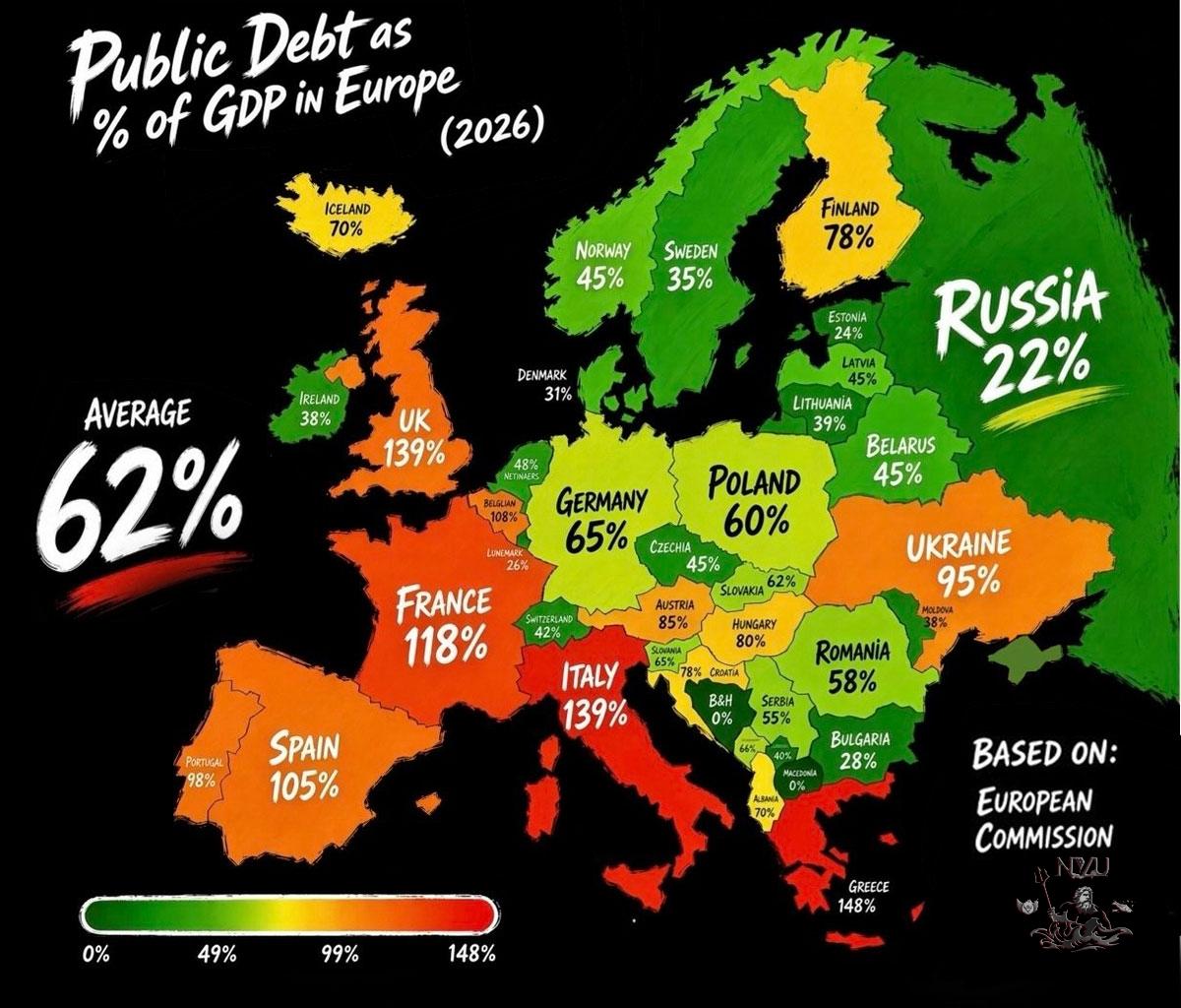
• Everyone Talks About U.S. Debt But Europe May Be in Worse Trouble


    America’s debt problem is impossible to miss. Federal debt has crossed $40.08T, another $1.9T deficit is expected this fiscal year and the 30-year Treasury yield is around 5.25%, its highest since 2007.


    Yet the next Western debt crisis may begin across the Atlantic.


    Washington has advantages that buy it time. The United States issues the world’s principal reserve currency, collects taxes through one federal government and sells debt through one enormous Treasury market. It can attract foreign capital and push part of the cost abroad. That does not make $40T harmless, but it can delay the reckoning.


    The eurozone has no comparable safety valve. It has one currency and one central bank, but 20 governments issuing their own debt, running separate budgets and answering to different voters. The ECB must set one monetary policy for economies with very different debts and growth rates.


    France shows why this is dangerous. Its 10-year bond yield has risen to about 4.15%, its highest since 2008 and now slightly above Italy’s. The European Commission expects a 5.1% French deficit this year and public debt near 120% of GDP by 2027. The problem can no longer be blamed on Greece or another small southern economy. France is the eurozone’s second-largest economy and one of the states meant to support rescue mechanisms for everyone else. If its debt starts trading like the old European “periphery,” the line between rescuers and rescued begins to disappear.


    Germany offers little comfort. Its 10-year yield is near 3.3%, a 15-year high, while its industry remains weak. Europe’s two central powers are paying more to borrow just as Brussels prepares another spending surge.


    The EU plans to mobilize up to €800B for rearmament. Member states must also finance ageing populations, expensive energy, social programs and support for Ukraine. Budget cuts provoke resistance. More borrowing raises yields. ECB intervention places more national debt risk onto the shared monetary system.


    The United States can abuse the dollar’s global role for longer. Europe may hit the wall first because it carries heavy debts without a genuine federal state standing behind them. One central bank cannot reconcile every national budget forever. So yes, America’s debt matters. But the louder surprise may come from a European Union that spent years presenting itself as the responsible alternative. Washington has a dangerous debt problem. Europe has the same problem inside a system poorly designed to survive it.


    No sympathy is required. Both created this predicament through wars, sanctions, subsidies and promises they can no longer finance cheaply. Now we get to see which model breaks first.

    Everyone Talks About U.S. Debt But Europe May Be in Worse TroubleAmerica’s debt problem is impossible to miss. Federal debt has crossed $40.08T, another $1.9T deficit is expected this fiscal year and the 30-year Treasury yield is around 5.25%, its highest since 2007. Yet the next Western debt crisis may begin across the Atlantic. Washington has advantages that buy it time. The United States issues the world’s principal reserve currency, collects taxes through one federal government and sells debt through one enormous Treasury market. It can attract foreign capital and push part of the cost abroad. That does not make $40T harmless, but it can delay the reckoning. The eurozone has no comparable safety valve. It has one currency and one central bank, but 20 governments issuing their own debt, running separate budgets and answering to different voters. The ECB must set one monetary policy for economies with very different debts and growth rates. France shows why this is dangerous. Its 10-year bond yield has risen to about 4.15%, its highest since 2008 and now slightly above Italy’s. The European Commission expects a 5.1% French deficit this year and public debt near 120% of GDP by 2027. The problem can no longer be blamed on Greece or another small southern economy. France is the eurozone’s second-largest economy and one of the states meant to support rescue mechanisms for everyone else. If its debt starts trading like the old European “periphery,” the line between rescuers and rescued begins to disappear. Germany offers little comfort. Its 10-year yield is near 3.3%, a 15-year high, while its industry remains weak. Europe’s two central powers are paying more to borrow just as Brussels prepares another spending surge. The EU plans to mobilize up to €800B for rearmament. Member states must also finance ageing populations, expensive energy, social programs and support for Ukraine. Budget cuts provoke resistance. More borrowing raises yields. ECB intervention places more national debt risk onto the shared monetary system. The United States can abuse the dollar’s global role for longer. Europe may hit the wall first because it carries heavy debts without a genuine federal state standing behind them. One central bank cannot reconcile every national budget forever. So yes, America’s debt matters. But the louder surprise may come from a European Union that spent years presenting itself as the responsible alternative. Washington has a dangerous debt problem. Europe has the same problem inside a system poorly designed to survive it. No sympathy is required. Both created this predicament through wars, sanctions, subsidies and promises they can no longer finance cheaply. Now we get to see which model breaks first.
    Like
    1
    0 Commentarios 0 Acciones 3K Views
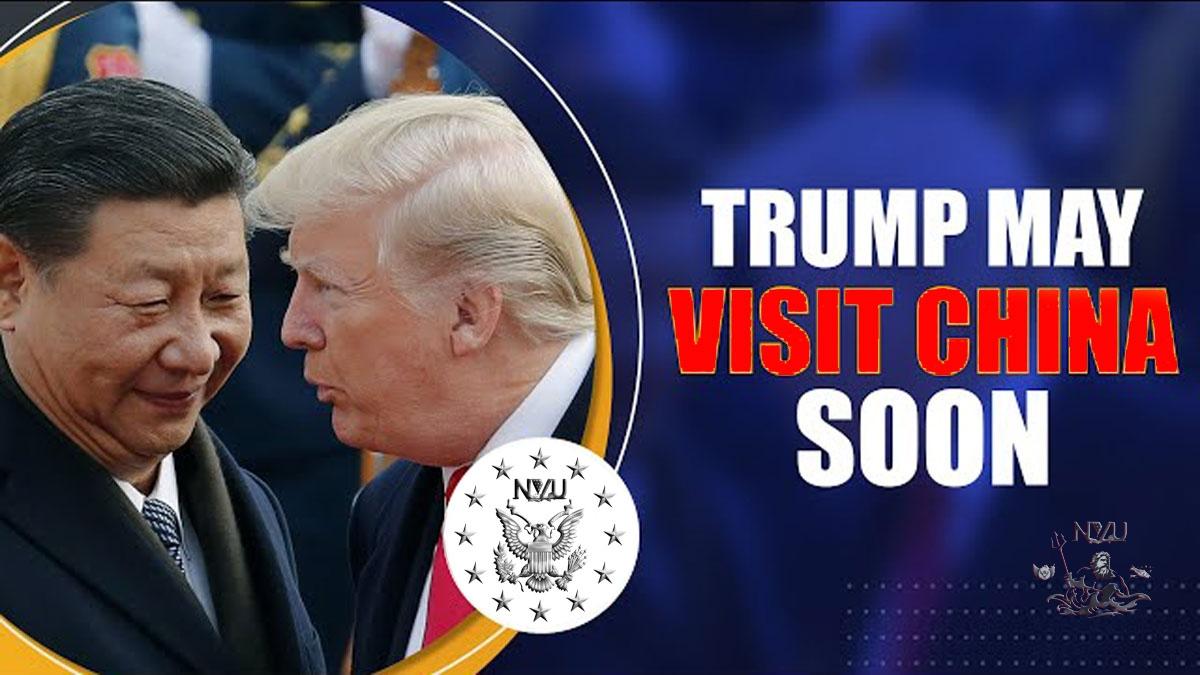
  • Trump may visit China soon

    US President Donald #Trump may visit #China in late October or early November, the South China Morning Post (SCMP) reported, citing sources. According to the newspaper, the Chinese government sent Trump an invitation for a state visit in early September, which usually indicates preparations are in the "final stage." "The official invitation is like the sound of a starting pistol in a 100-metre race, with the end in sight," one source said. The trip is expected to take place around the APEC summit in South Korea on October 31 - November 1.

    "There are a few small loose ends. But the major blocks are already resolved. Things are taking shape," the source noted, adding that the talks could result in "a new deal to purchase US goods," with Boeing airplanes "very likely" on the list, as Washington is pressing China to procure 500 aircraft. The source also said that in addition to visiting Beijing, Trump had been offered a high-speed rail trip to another Chinese city, most likely Shanghai.

    SCMP reported that Chinese President Xi Jinping may pay a return visit to the United States in 2026 after Trump’s anticipated trip. At the same time, the newspaper noted that Washington fears the visit could be seen as a concession to Beijing. "Ultimately, President Trump has the final say on where he wants to go and what he wants to do in China. He seems to be quite excited about the visit personally, but he’s got to listen to his team too," another source told the paper.

    If the trip goes ahead, it will be the first visit by a US president to China in eight years. The last such visit took place in 2017, during Trump’s first term.

    Trump earlier announced plans to speak with Xi Jinping by phone on September 19. US Treasury Secretary Scott Bessent later clarified that the two leaders will approve the final terms of a deal on the future operation of China’s TikTok social network in the United States.
    Trump may visit China soon US President Donald #Trump may visit #China in late October or early November, the South China Morning Post (SCMP) reported, citing sources. According to the newspaper, the Chinese government sent Trump an invitation for a state visit in early September, which usually indicates preparations are in the "final stage." "The official invitation is like the sound of a starting pistol in a 100-metre race, with the end in sight," one source said. The trip is expected to take place around the APEC summit in South Korea on October 31 - November 1. "There are a few small loose ends. But the major blocks are already resolved. Things are taking shape," the source noted, adding that the talks could result in "a new deal to purchase US goods," with Boeing airplanes "very likely" on the list, as Washington is pressing China to procure 500 aircraft. The source also said that in addition to visiting Beijing, Trump had been offered a high-speed rail trip to another Chinese city, most likely Shanghai. SCMP reported that Chinese President Xi Jinping may pay a return visit to the United States in 2026 after Trump’s anticipated trip. At the same time, the newspaper noted that Washington fears the visit could be seen as a concession to Beijing. "Ultimately, President Trump has the final say on where he wants to go and what he wants to do in China. He seems to be quite excited about the visit personally, but he’s got to listen to his team too," another source told the paper. If the trip goes ahead, it will be the first visit by a US president to China in eight years. The last such visit took place in 2017, during Trump’s first term. Trump earlier announced plans to speak with Xi Jinping by phone on September 19. US Treasury Secretary Scott Bessent later clarified that the two leaders will approve the final terms of a deal on the future operation of China’s TikTok social network in the United States.
    Like
    1
    0 Commentarios 0 Acciones 24K Views
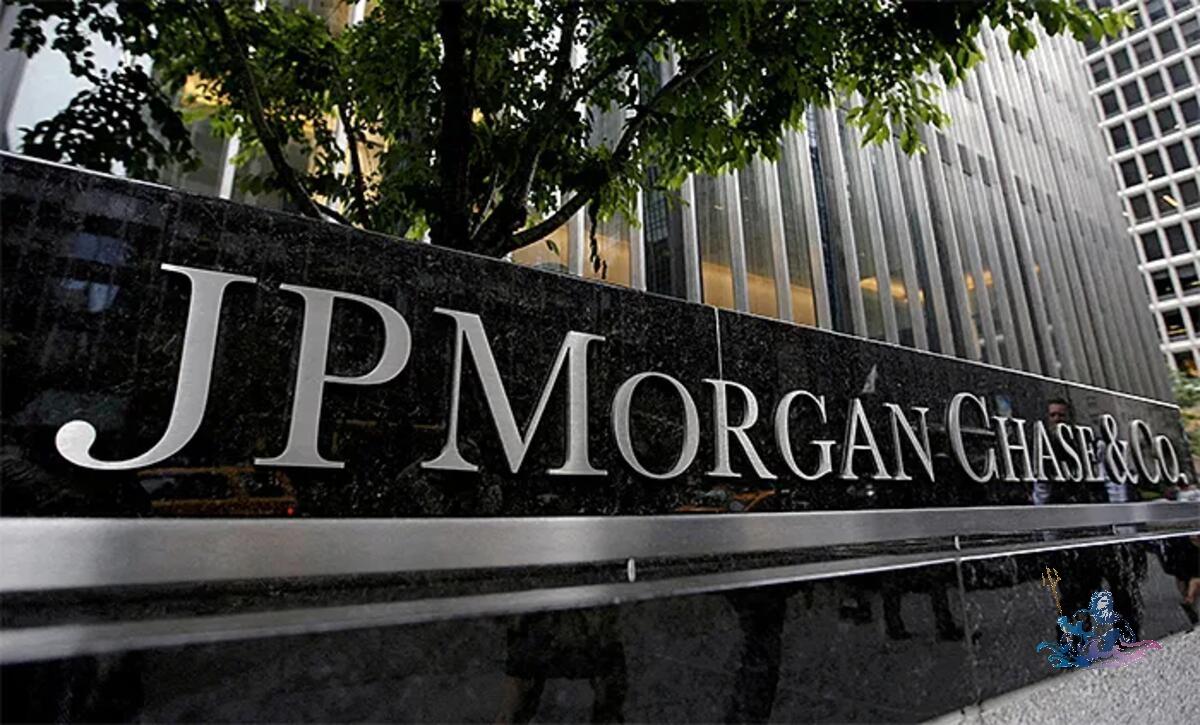
  • Is JP Morgan complicit in illegal Iranian funding?

    The US Treasury Department is looking into #JPMorgan Chase's relationship with a hedge fund that is said to be a part of Iranian oil trader Hossein #Shamkhani's network, Bloomberg News reported on Friday. Iranian opposition sources claim that the US Treasury opened an investigation into a company belonging to Hossein Shamkhani, the son of Ali Shamkhani, a senior #Iranian who was formerly the commander of the Iranian Navy, the Minister of Defense and the Secretary of the Supreme Council for National Security.

    The twist in the plot is according to the same sources, that the bank suspected of being connected with that company is none other than the American JP MORGAN bank (considered the largest bank in the USA).
    Is JP Morgan complicit in illegal Iranian funding? The US Treasury Department is looking into #JPMorgan Chase's relationship with a hedge fund that is said to be a part of Iranian oil trader Hossein #Shamkhani's network, Bloomberg News reported on Friday. Iranian opposition sources claim that the US Treasury opened an investigation into a company belonging to Hossein Shamkhani, the son of Ali Shamkhani, a senior #Iranian who was formerly the commander of the Iranian Navy, the Minister of Defense and the Secretary of the Supreme Council for National Security. The twist in the plot is according to the same sources, that the bank suspected of being connected with that company is none other than the American JP MORGAN bank (considered the largest bank in the USA).
    Angry
    1
    0 Commentarios 0 Acciones 19K Views
Patrocinados

Not yet a #HO1 Member... Select your Member ship & register !

Why Subscribe? 1. To access genuine and 100% validated Information and News 2. All In One Place and ZERO annoying advert 3. To Access the Latest News in Real Time 4. Multiple languages...

X-Pulse, the HO1 Think Tank https://thinktank.x-pulse.org/