
 DONATIONS
 Worldwide Radio Stations
US-Iran deal: Statements from parties, International response
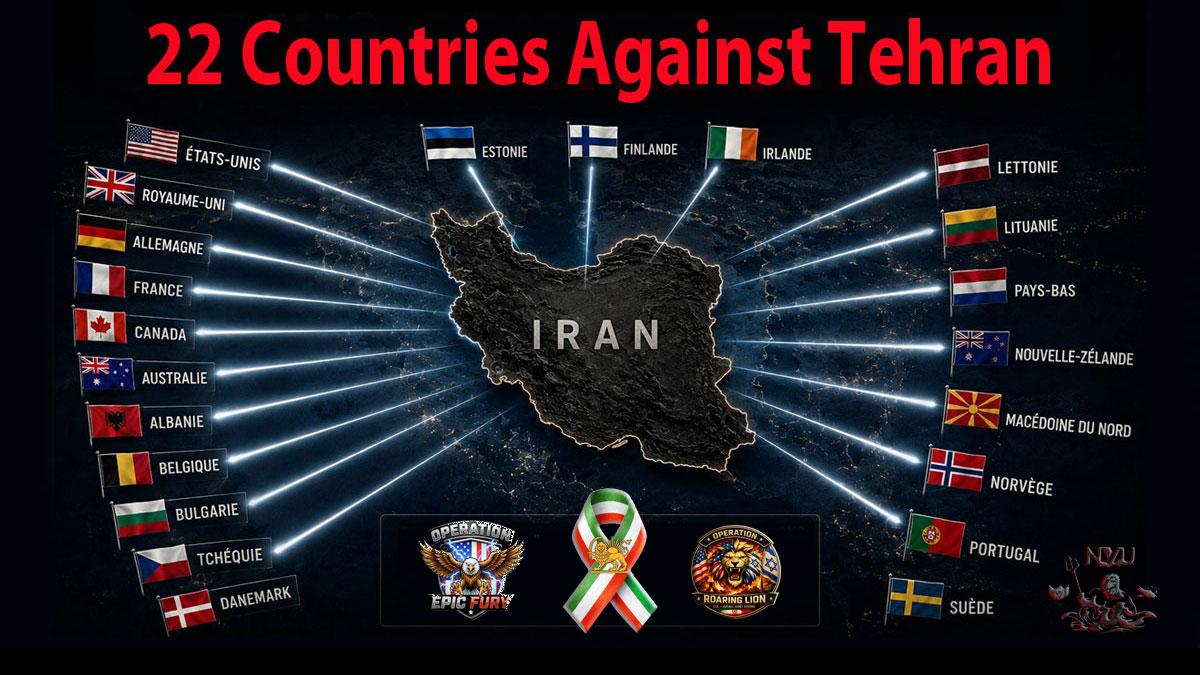
The United States and Iran have reached an agreement aimed at resolving the conflict. The signing of the accord is scheduled to take place in Geneva on June 19.
The US maritime blockade of Iran will end on June 15, while military operations on all fronts, including in Lebanon, will cease immediately and irrevocably, Iranian Deputy Foreign Minister Kazem Gharibabadi said.
According to him, during the 60-day ceasefire period the sides will discuss sanctions relief for Iran, Tehran’s nuclear program, the country’s reconstruction and economic development, as well as mechanisms for monitoring compliance with the future agreement. The deputy foreign minister stressed that the start of negotiations depends on actions by the United States, including the cessation of military operations, the lifting of the blockade of the Strait of Hormuz, and the unfreezing of Iranian assets.
Key statements from the parties involved and the international reaction.
US statements
US President Donald Trump said the signing of the agreement with the Islamic Republic will take place on June 19.
The US leader thanked Russian President Vladimir Putin and Chinese President Xi Jinping for their role in facilitating efforts to resolve the conflict with Iran.
Trump announced the immediate lifting of the maritime blockade of Iran and said he had authorized the opening of the Strait of Hormuz for free passage. According to him, the strait will be reopened for clearance operations after the agreement is signed on June 19.
Negotiations on a possible 20-year suspension of Iran’s uranium enrichment are still ongoing, but Washington could accept a 15-year freeze. Trump hinted that a 15-year suspension could be considered acceptable, but said Iran would be permanently restricted to low-level enrichment that the military could never use, The New York Times reported, citing an interview with the US leader.
The United States will not yet deal with the removal of Iran’s nuclear fuel stockpiles. "We'll get the nuclear dust later on when we're ready to go in and do it. I'd say over the next month or two, there's no rush," Trump said.
If a final agreement with Iran is not reached, the United States will either resume military operations against the country or assume the role of a "guardian of the Middle East" in exchange for 20% of the region’s revenues.
US Vice President JD Vance described the conclusion of the deal with Iran as a major victory for the United States. He said the agreement could reshape the Middle East for the next 50 years.
Trump also said that Israeli Prime Minister Benjamin Netanyahu is satisfied with the terms of the agreement to be concluded.
Statements from Iran
Iranian Deputy Foreign Minister Kazem Gharibabadi said that "the text of the memorandum of understanding has been finalized and the official signing will take place on Friday in Switzerland."
The Mehr news agency reported that the Strait of Hormuz will be fully reopened within 30 days after the signing of the agreement between Iran and the United States.
According to Mehr, within one month the United States will be obliged to lift the maritime blockade of Iranian ports and withdraw its military contingent from areas bordering the Islamic Republic. It also says that the US will refrain from introducing new anti-Iran sanctions during the final round of negotiations and will not deploy additional forces to the Middle East. At the same time, a ceasefire is expected to take effect immediately "on all fronts," including in Lebanon.
The agency also reported that the United States must unfreeze Iranian assets worth about $12 billion prior to the start of the final phase of talks, and a further $12 billion within 60 days, during which the ceasefire and consultations will continue. Washington has, however, denied any obligation to release $12 billion in assets ahead of the negotiations.
Iran estimates the damage caused at $300 billion, and says that a reconstruction plan for the country should be presented by the United States and its allies.
Iran and the United States have agreed to establish a mechanism to monitor the implementation of the agreement, with its provisions to be enshrined in a relevant UN Security Council resolution.
According to Gharibabadi, during the 60-day ceasefire period the sides will discuss sanctions relief for Iran, Tehran’s nuclear program, the country’s reconstruction and economic development, as well as mechanisms for monitoring compliance with commitments.
The deputy foreign minister added that the start of negotiations depends on actions by the United States, including the cessation of military operations, the lifting of the blockade of the Strait of Hormuz, and the unfreezing of Iranian assets.
Efforts by mediators
Pakistani Prime Minister Shehbaz Sharif confirmed that the United States and Iran have reached a peace deal, with the signing ceremony scheduled for June 19 in Switzerland.
He noted that both sides had announced the immediate and permanent cessation of military operations on all fronts, including in Lebanon.
Sharif said that a series of meetings involving mediators will take place ahead of the signing of the agreement.
The Pakistani prime minister also thanked Qatar, Saudi Arabia, and Turkey for their contribution to achieving a diplomatic resolution of the conflict.
Geneva ceremony
According to The New York Times, Iran will be represented by Speaker of the Majlis (unicameral parliament) Mohammad Bagher Ghalibaf and Foreign Minister Abbas Araghchi.
The US side will be represented by Vice President JD Vance. The New York Times notes that, if it takes place, the event would mark the highest-level meeting between Washington and Tehran in nearly half a century.
Earlier, Vance told Fox News that Trump might also travel to Geneva to sign the agreement.
International reaction
UN Secretary-General Antonio Guterres welcomed the agreement between the United States and Iran, calling it a critically important step toward a peaceful resolution of the conflict. Guterres confirmed that the UN stands ready to support the parties in achieving a sustainable and comprehensive peace.
The United Kingdom, Germany, Italy, and France also welcomed the agreement and said they were prepared to lift sanctions in response to clear and verifiable actions by Iran under its nuclear program. They added that they are considering cooperation with the United States, Iran, and the IAEA to prevent Tehran from obtaining nuclear weapons.
UK Prime Minister Keir Starmer also said that the UK and France are ready to support the restoration of navigation through the Strait of Hormuz, including, if necessary, through the deployment of a defensive independent multinational mission, whose planning they have so far led, particularly to provide coordinated support for demining operations.
Japan, Australia, and New Zealand welcomed the agreement between the United States and Iran and expressed hope for the swift restoration of freedom of navigation through the Strait of Hormuz.
***

 Portuguese (Brazil)
 English
 Arabic
 French
 Spanish
 Portuguese
 Deutsch
 Turkish
 Dutch
Dutch
 Italiano
 Russian
 Romaian
 Greek
Greek