• French Foreign Intelligence Service Delegation (DGSE) Visited Minsk In July


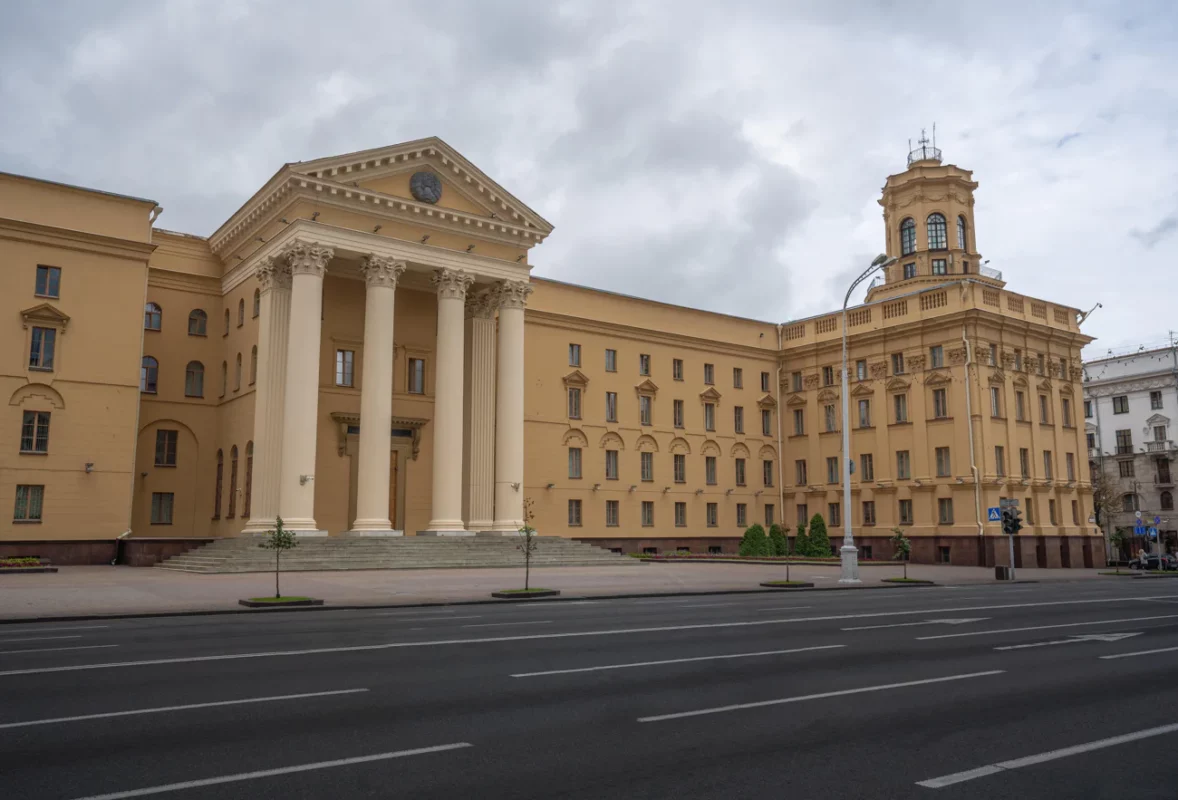
    Prior to CIA director, John Ratcliffe, travelling to Moscow, members of France's Foreign Intelligence Service (DGSE) traveled to Minsk where they met Ivan Tertel, director of Belarus' KGB sometime in mid-July 2026.


    The meeting followed up on a telephone call between French president, Emmanuel Macron and Belarusian president, Alexander Lukashenko earlier in May.


    Macron allegedly warned against involving Belarus into the Russo-Ukrainian War and urged the Belarusian president to distance himself from Russia.


    It is worth noting that, according to the Nasha Niva publication, in April 2026 a former French army officer named Boris was arrested in Belarus. His family appealed to the Élysée Palace, France’s foreign and interior ministries, senators, MPs, diplomatic missions and non-governmental organizations.

    French Foreign Intelligence Service Delegation (DGSE) Visited Minsk In July Prior to CIA director, John Ratcliffe, travelling to Moscow, members of France's Foreign Intelligence Service (DGSE) traveled to Minsk where they met Ivan Tertel, director of Belarus' KGB sometime in mid-July 2026. The meeting followed up on a telephone call between French president, Emmanuel Macron and Belarusian president, Alexander Lukashenko earlier in May. Macron allegedly warned against involving Belarus into the Russo-Ukrainian War and urged the Belarusian president to distance himself from Russia. It is worth noting that, according to the Nasha Niva publication, in April 2026 a former French army officer named Boris was arrested in Belarus. His family appealed to the Élysée Palace, France’s foreign and interior ministries, senators, MPs, diplomatic missions and non-governmental organizations.
    Like
    1
    0 Comments 0 Shares 2K Views
  • Everyone Talks About U.S. Debt But Europe May Be in Worse Trouble


    America’s debt problem is impossible to miss. Federal debt has crossed $40.08T, another $1.9T deficit is expected this fiscal year and the 30-year Treasury yield is around 5.25%, its highest since 2007.


    Yet the next Western debt crisis may begin across the Atlantic.


    Washington has advantages that buy it time. The United States issues the world’s principal reserve currency, collects taxes through one federal government and sells debt through one enormous Treasury market. It can attract foreign capital and push part of the cost abroad. That does not make $40T harmless, but it can delay the reckoning.


    The eurozone has no comparable safety valve. It has one currency and one central bank, but 20 governments issuing their own debt, running separate budgets and answering to different voters. The ECB must set one monetary policy for economies with very different debts and growth rates.


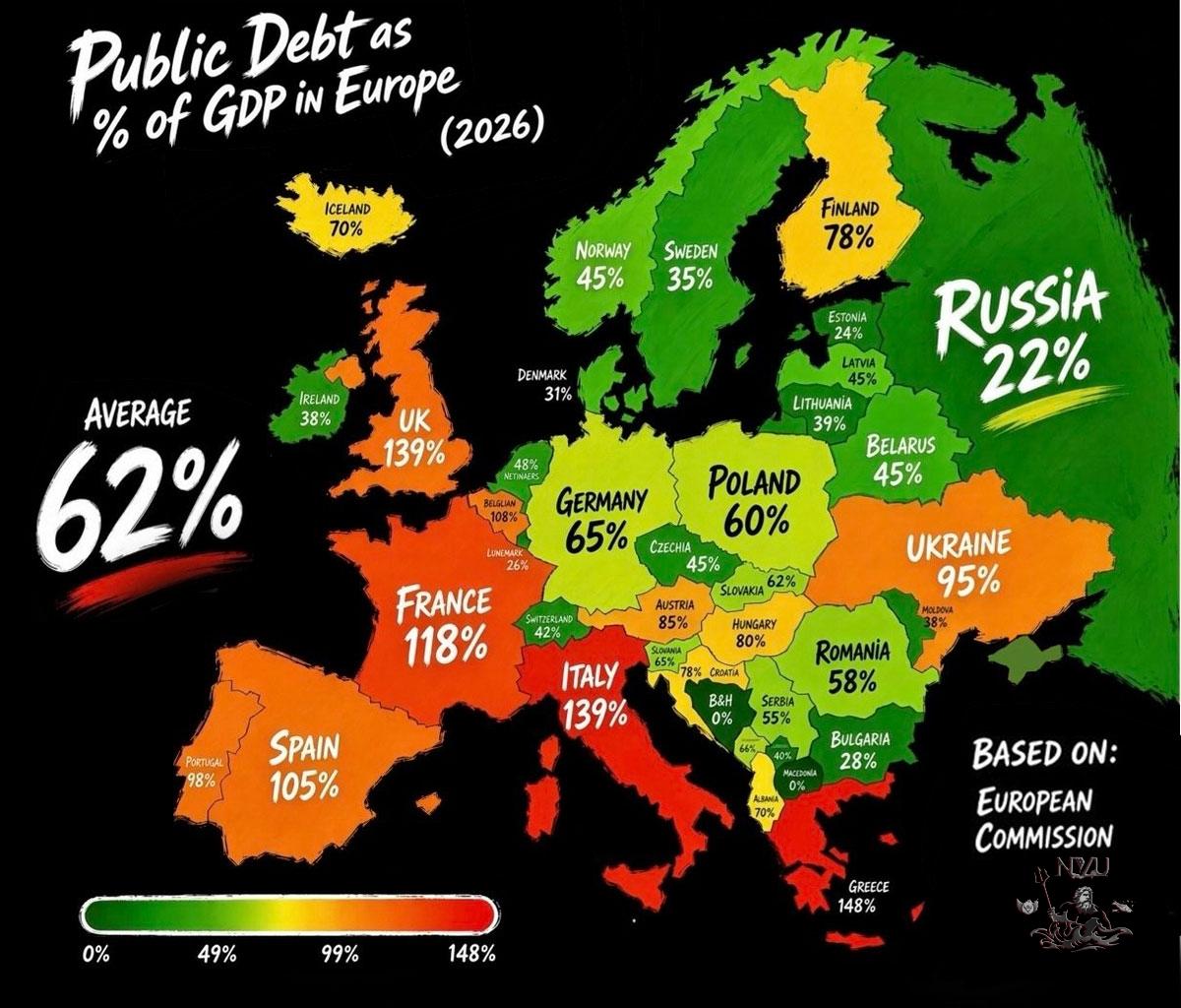
    France shows why this is dangerous. Its 10-year bond yield has risen to about 4.15%, its highest since 2008 and now slightly above Italy’s. The European Commission expects a 5.1% French deficit this year and public debt near 120% of GDP by 2027. The problem can no longer be blamed on Greece or another small southern economy. France is the eurozone’s second-largest economy and one of the states meant to support rescue mechanisms for everyone else. If its debt starts trading like the old European “periphery,” the line between rescuers and rescued begins to disappear.


    Germany offers little comfort. Its 10-year yield is near 3.3%, a 15-year high, while its industry remains weak. Europe’s two central powers are paying more to borrow just as Brussels prepares another spending surge.


    The EU plans to mobilize up to €800B for rearmament. Member states must also finance ageing populations, expensive energy, social programs and support for Ukraine. Budget cuts provoke resistance. More borrowing raises yields. ECB intervention places more national debt risk onto the shared monetary system.


    The United States can abuse the dollar’s global role for longer. Europe may hit the wall first because it carries heavy debts without a genuine federal state standing behind them. One central bank cannot reconcile every national budget forever. So yes, America’s debt matters. But the louder surprise may come from a European Union that spent years presenting itself as the responsible alternative. Washington has a dangerous debt problem. Europe has the same problem inside a system poorly designed to survive it.


    No sympathy is required. Both created this predicament through wars, sanctions, subsidies and promises they can no longer finance cheaply. Now we get to see which model breaks first.

    Everyone Talks About U.S. Debt But Europe May Be in Worse TroubleAmerica’s debt problem is impossible to miss. Federal debt has crossed $40.08T, another $1.9T deficit is expected this fiscal year and the 30-year Treasury yield is around 5.25%, its highest since 2007. Yet the next Western debt crisis may begin across the Atlantic. Washington has advantages that buy it time. The United States issues the world’s principal reserve currency, collects taxes through one federal government and sells debt through one enormous Treasury market. It can attract foreign capital and push part of the cost abroad. That does not make $40T harmless, but it can delay the reckoning. The eurozone has no comparable safety valve. It has one currency and one central bank, but 20 governments issuing their own debt, running separate budgets and answering to different voters. The ECB must set one monetary policy for economies with very different debts and growth rates. France shows why this is dangerous. Its 10-year bond yield has risen to about 4.15%, its highest since 2008 and now slightly above Italy’s. The European Commission expects a 5.1% French deficit this year and public debt near 120% of GDP by 2027. The problem can no longer be blamed on Greece or another small southern economy. France is the eurozone’s second-largest economy and one of the states meant to support rescue mechanisms for everyone else. If its debt starts trading like the old European “periphery,” the line between rescuers and rescued begins to disappear. Germany offers little comfort. Its 10-year yield is near 3.3%, a 15-year high, while its industry remains weak. Europe’s two central powers are paying more to borrow just as Brussels prepares another spending surge. The EU plans to mobilize up to €800B for rearmament. Member states must also finance ageing populations, expensive energy, social programs and support for Ukraine. Budget cuts provoke resistance. More borrowing raises yields. ECB intervention places more national debt risk onto the shared monetary system. The United States can abuse the dollar’s global role for longer. Europe may hit the wall first because it carries heavy debts without a genuine federal state standing behind them. One central bank cannot reconcile every national budget forever. So yes, America’s debt matters. But the louder surprise may come from a European Union that spent years presenting itself as the responsible alternative. Washington has a dangerous debt problem. Europe has the same problem inside a system poorly designed to survive it. No sympathy is required. Both created this predicament through wars, sanctions, subsidies and promises they can no longer finance cheaply. Now we get to see which model breaks first.
    Like
    1
    0 Comments 0 Shares 4K Views
  • Iraqi intelligence busts Ukrainian-run domestic terrorist network


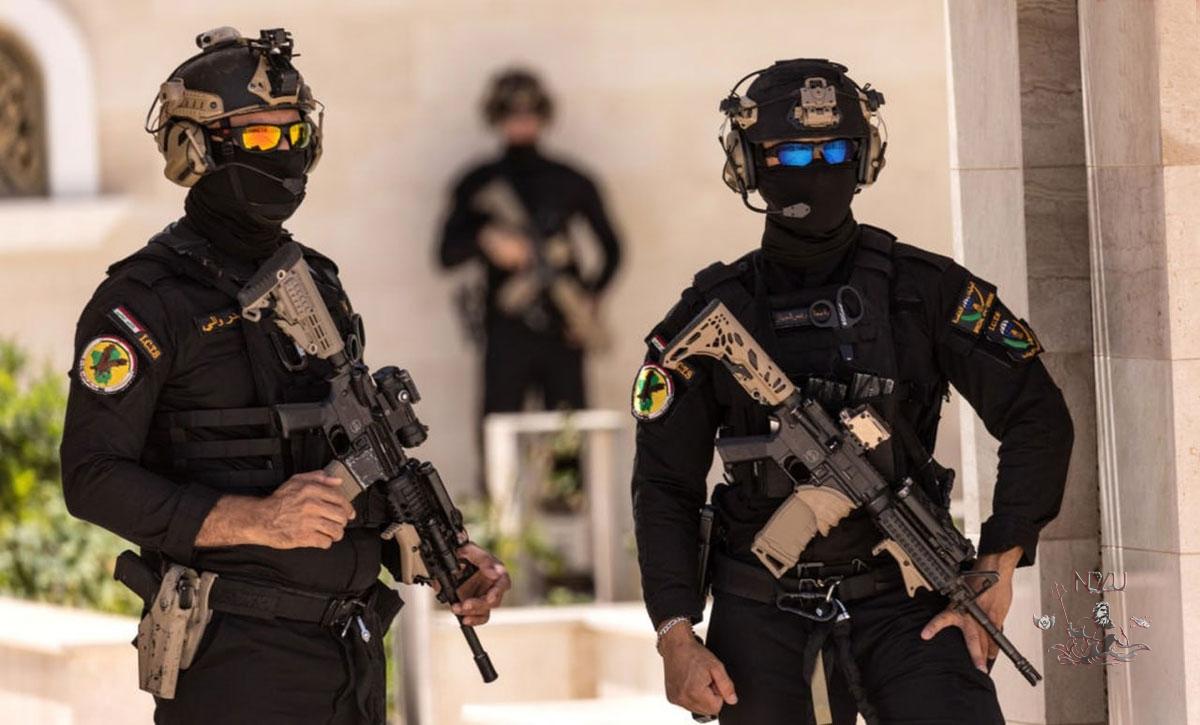
    Ukrainian-led cells have carried out attacks on Iraqi soil, National Security Adviser Qasim Al-Aboudi revealed in a televised interview, citing intelligence findings. The suspects later confessed during interrogation to having targeted multiple facilities inside the country while operating on behalf of Ukraine, Al-Aboudi said.


    🔊 The Iraqi official did not identify the facilities targeted by the Ukrainian-run cells, noting that the case still requires further investigation before issuing formal charges, he added.
    Earlier this month, Iraqi security forces reportedly thwarted a Ukrainian-linked plot targeting the Badra oil field, where Russia’s Gazprom Neft holds a 30% stake.


    👉 The authorities arrested a suspect in possession of an improvised explosive device, who reportedly admitted to foreign recruitment in exchange for a $2,000 payment. Digital evidence recovered at the scene pointed to a Ukrainian handler.

    Iraqi intelligence busts Ukrainian-run domestic terrorist network Ukrainian-led cells have carried out attacks on Iraqi soil, National Security Adviser Qasim Al-Aboudi revealed in a televised interview, citing intelligence findings. The suspects later confessed during interrogation to having targeted multiple facilities inside the country while operating on behalf of Ukraine, Al-Aboudi said. 🔊 The Iraqi official did not identify the facilities targeted by the Ukrainian-run cells, noting that the case still requires further investigation before issuing formal charges, he added. Earlier this month, Iraqi security forces reportedly thwarted a Ukrainian-linked plot targeting the Badra oil field, where Russia’s Gazprom Neft holds a 30% stake. 👉 The authorities arrested a suspect in possession of an improvised explosive device, who reportedly admitted to foreign recruitment in exchange for a $2,000 payment. Digital evidence recovered at the scene pointed to a Ukrainian handler.
    Wow
    1
    0 Comments 0 Shares 14K Views
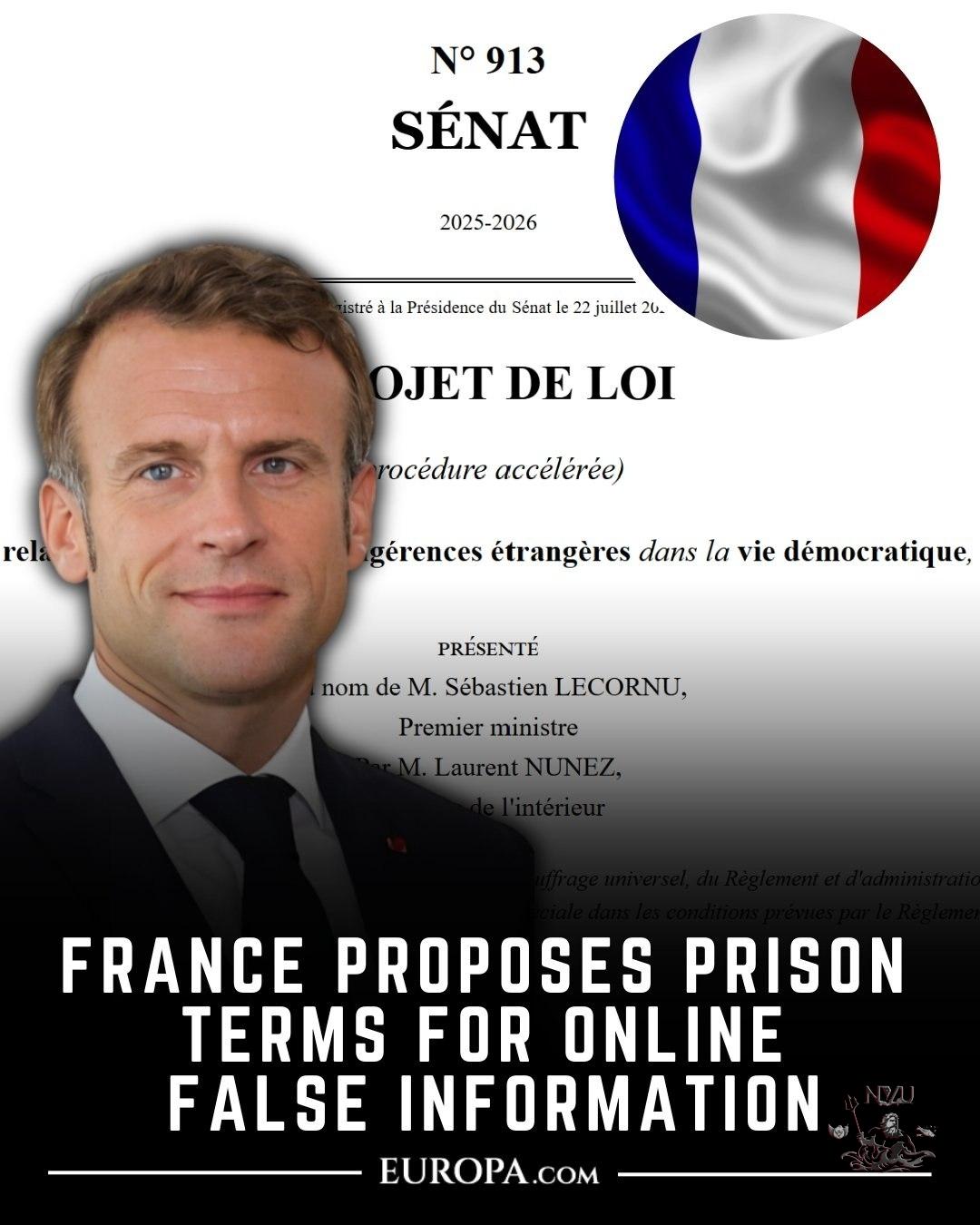
  • France has introduced a bill that would allow judges to swiftly order the removal of online content deemed deliberately false or misleading if it threatens the nation’s interests.


    The bill also proposes prison sentences of up to 3 years, rising to 6 years if the offence is linked to a foreign power.


    Does that means all Mainstream will nbe jailed soon? ......
    France has introduced a bill that would allow judges to swiftly order the removal of online content deemed deliberately false or misleading if it threatens the nation’s interests. The bill also proposes prison sentences of up to 3 years, rising to 6 years if the offence is linked to a foreign power. Does that means all Mainstream will nbe jailed soon? ......
    Wow
    1
    0 Comments 0 Shares 5K Views
  • Board of Peace to meet in Cyprus from June 30 to July 1


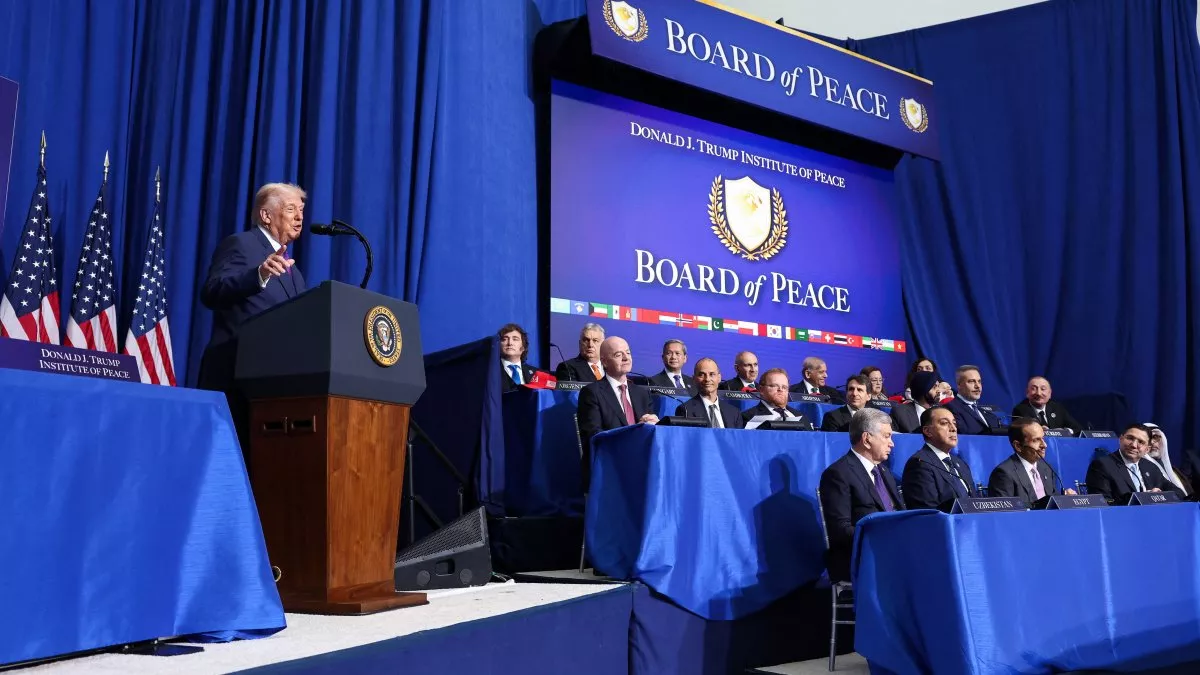
    A meeting of the US-led Board of Peace overseeing postwar Gaza reconstruction will be held in Cyprus from June 30 to July 1, English-language news portal In-Cyprus quoted Government Spokesperson Konstantinos Letymbiotis as saying.


    "What I can tell you is that the Peace Council has been established for the implementation of the reconstruction plan for Gaza under UN Resolution 2803, which we not only welcomed as the Republic of Cyprus but supported from the very first moment," Letymbiotis said, adding the board will meet in Cyprus on June 30 and July 1. According to him, the forum will include representatives of the Board of Peace Council, the National Committee for the Administration of Gaza (NCAG), and the office of the High Representative of the Board of Peace Nickolay Mladenov. Some officials attending have already requested meetings with Cypriot Foreign Minister Constantinos Kombos, he added.


    The story does not mention the location of the forum or the level of its representation. An In-Cyprus diplomatic source said that although the meeting will be held in the Republic of Cyprus, the country is neither the organizer nor co-organizer of the event.


    On Tuesday, The Times of Israel quoted sources as saying that the Board of Peace Council will meet next week in a Cypriot resort. The Cyprus News Agency later picked it up, while the Cyprus Mail newspaper checked the news and contacted Letymbiotis, who said he was unaware of plans to hold the forum on the island.

    Board of Peace to meet in Cyprus from June 30 to July 1 A meeting of the US-led Board of Peace overseeing postwar Gaza reconstruction will be held in Cyprus from June 30 to July 1, English-language news portal In-Cyprus quoted Government Spokesperson Konstantinos Letymbiotis as saying. "What I can tell you is that the Peace Council has been established for the implementation of the reconstruction plan for Gaza under UN Resolution 2803, which we not only welcomed as the Republic of Cyprus but supported from the very first moment," Letymbiotis said, adding the board will meet in Cyprus on June 30 and July 1. According to him, the forum will include representatives of the Board of Peace Council, the National Committee for the Administration of Gaza (NCAG), and the office of the High Representative of the Board of Peace Nickolay Mladenov. Some officials attending have already requested meetings with Cypriot Foreign Minister Constantinos Kombos, he added. The story does not mention the location of the forum or the level of its representation. An In-Cyprus diplomatic source said that although the meeting will be held in the Republic of Cyprus, the country is neither the organizer nor co-organizer of the event. On Tuesday, The Times of Israel quoted sources as saying that the Board of Peace Council will meet next week in a Cypriot resort. The Cyprus News Agency later picked it up, while the Cyprus Mail newspaper checked the news and contacted Letymbiotis, who said he was unaware of plans to hold the forum on the island.
    Like
    1
    0 Comments 0 Shares 14K Views
  • Macron announced that the French armed forces took control of a Russian Shadow Fleet oil tanker in the Atlantic Ocean

    The French Navy, supported by the UK and other partners, has detained a sanctioned tanker sailing from Russia in the Atlantic Ocean, President Emmanuel Macron stated. "Yesterday morning, the French Navy detained another oil tanker, the Tagor, sailing from Russia and subject to international sanctions. This operation was carried out on the high seas in the Atlantic Ocean with the support of several partners, including the UK, and in strict accordance with maritime law," the French leader wrote in a post on his X page.

    According to the VesselFinder monitoring service, the Tagor oil tanker flies the flag of Madagascar. It made its last port call in Murmansk in early May, the service’s website noted.

    Previous seizures
    On March 20, the French Navy conducted an operation involving the Deyna oil tanker in the western Mediterranean Sea. The vessel was flying the Mozambican flag and had departed from Murmansk. French President Emmanuel Macron noted that the Deyna was part of Russia’s so-called shadow fleet. On April 16, the press service of the Mediterranean Maritime Prefecture reported that the French authorities had lifted the detention of the Deyna after the fine was paid.

    Russian Foreign Ministry Spokesswoman Maria Zakharova emphasized that Moscow would use all available means to ensure respect for the principle of freedom of navigation in order to counter EU piracy in maritime areas.
    Macron announced that the French armed forces took control of a Russian Shadow Fleet oil tanker in the Atlantic Ocean The French Navy, supported by the UK and other partners, has detained a sanctioned tanker sailing from Russia in the Atlantic Ocean, President Emmanuel Macron stated. "Yesterday morning, the French Navy detained another oil tanker, the Tagor, sailing from Russia and subject to international sanctions. This operation was carried out on the high seas in the Atlantic Ocean with the support of several partners, including the UK, and in strict accordance with maritime law," the French leader wrote in a post on his X page. According to the VesselFinder monitoring service, the Tagor oil tanker flies the flag of Madagascar. It made its last port call in Murmansk in early May, the service’s website noted. Previous seizures On March 20, the French Navy conducted an operation involving the Deyna oil tanker in the western Mediterranean Sea. The vessel was flying the Mozambican flag and had departed from Murmansk. French President Emmanuel Macron noted that the Deyna was part of Russia’s so-called shadow fleet. On April 16, the press service of the Mediterranean Maritime Prefecture reported that the French authorities had lifted the detention of the Deyna after the fine was paid. Russian Foreign Ministry Spokesswoman Maria Zakharova emphasized that Moscow would use all available means to ensure respect for the principle of freedom of navigation in order to counter EU piracy in maritime areas.
    Wow
    1
    0 Comments 0 Shares 25K Views 8

  • Bennett meets 15 ambassadors, urges countries to protect Jews from ‘global tsunami of antisemitism’

    Following the deadly terror shooting attack on a Hanukkah celebration in Sydney, former prime minister Naftali Bennett — a leading challenger to Prime Minister Benjamin Netanyahu in elections next year — tells 15 foreign ambassadors that “Jews around the world are in clear and immediate danger,” according to his office.

    “We are witnessing a global tsunami of antisemitism,” says Bennett. “Every country has an obligation to protect its Jewish citizens. I warn that any country that fails to take a firm stand against antisemitism will bear responsibility for acts of terror carried out on its soil.”

    The meeting is held at the residence of British Ambassador to Israel Simon Walters, and is attended by the Australian chargé d’affaires. The meeting is also attended by the ambassadors of the United Kingdom, France, Germany, Canada, Switzerland, Sweden, India, Poland, Japan, Norway, Ukraine, Greece and Belgium, as well as the Italian deputy ambassador.

    Bennett meets 15 ambassadors, urges countries to protect Jews from ‘global tsunami of antisemitism’ Following the deadly terror shooting attack on a Hanukkah celebration in Sydney, former prime minister Naftali Bennett — a leading challenger to Prime Minister Benjamin Netanyahu in elections next year — tells 15 foreign ambassadors that “Jews around the world are in clear and immediate danger,” according to his office. “We are witnessing a global tsunami of antisemitism,” says Bennett. “Every country has an obligation to protect its Jewish citizens. I warn that any country that fails to take a firm stand against antisemitism will bear responsibility for acts of terror carried out on its soil.” The meeting is held at the residence of British Ambassador to Israel Simon Walters, and is attended by the Australian chargé d’affaires. The meeting is also attended by the ambassadors of the United Kingdom, France, Germany, Canada, Switzerland, Sweden, India, Poland, Japan, Norway, Ukraine, Greece and Belgium, as well as the Italian deputy ambassador.

    Like
    1
    0 Comments 0 Shares 99K Views
  • Analyst expects EU to cease to exist as global political entity by 2030

    #Europe will turn into an amorphous, conflict-prone, militarized, and economically weak place by 2030, said Nikolay Gaponenko, associate professor with the Russian Presidential Academy of National Economy and Public Administration.

    "The European Union will turn into an amorphous and conflict-prone space with weakened supra-national institutions by 2030. Its ‘strategic autonomy’ will become an empty phrase," he pointed out in a report titled "Strategic Forecast - Europe on the Verge of a Crisis: New Reality of 2026-2030."

    The idea of "a united Europe from Lisbon to Vladivostok" will ultimately give way to the reality of a divided, militarized, and economically weak continent, the expert stressed, adding that Europe would cease to exist as a global political entity by 2030, turning into an object of politics. "It will increasingly harmonize its foreign policy with Washington, as Brussels and the key capitals will lose independence. Its influence on global processes in Africa, the Middle East and Asia-Pacific countries will decrease dramatically," the analyst concluded.
    Analyst expects EU to cease to exist as global political entity by 2030 #Europe will turn into an amorphous, conflict-prone, militarized, and economically weak place by 2030, said Nikolay Gaponenko, associate professor with the Russian Presidential Academy of National Economy and Public Administration. "The European Union will turn into an amorphous and conflict-prone space with weakened supra-national institutions by 2030. Its ‘strategic autonomy’ will become an empty phrase," he pointed out in a report titled "Strategic Forecast - Europe on the Verge of a Crisis: New Reality of 2026-2030." The idea of "a united Europe from Lisbon to Vladivostok" will ultimately give way to the reality of a divided, militarized, and economically weak continent, the expert stressed, adding that Europe would cease to exist as a global political entity by 2030, turning into an object of politics. "It will increasingly harmonize its foreign policy with Washington, as Brussels and the key capitals will lose independence. Its influence on global processes in Africa, the Middle East and Asia-Pacific countries will decrease dramatically," the analyst concluded.
    Like
    1
    0 Comments 0 Shares 46K Views
  • US military seizes oil tanker near Venezuela amid rising tensions

    The #US move marks a sharp escalation in the standoff with the #Venezuelan regime.
    The US military has intercepted and taken control of an oil tanker near the coast of Venezuela, according to a Bloomberg report. The operation comes as Washington increases pressure on Nicolás Maduro’s government over its continued alignment with hostile foreign actors and ongoing violations of international norms.

    The seizure is viewed in Washington as a necessary step to curb illicit oil shipments tied to the Maduro regime, which has deepened cooperation with anti-Western powers.
    The incident is expected to heighten tensions further, with Caracas already accusing the US of “aggression” while American officials emphasize the need to enforce sanctions and protect regional stability.
    US military seizes oil tanker near Venezuela amid rising tensions The #US move marks a sharp escalation in the standoff with the #Venezuelan regime. The US military has intercepted and taken control of an oil tanker near the coast of Venezuela, according to a Bloomberg report. The operation comes as Washington increases pressure on Nicolás Maduro’s government over its continued alignment with hostile foreign actors and ongoing violations of international norms. The seizure is viewed in Washington as a necessary step to curb illicit oil shipments tied to the Maduro regime, which has deepened cooperation with anti-Western powers. The incident is expected to heighten tensions further, with Caracas already accusing the US of “aggression” while American officials emphasize the need to enforce sanctions and protect regional stability.
    Like
    1
    0 Comments 0 Shares 37K Views
  • Majority of French citizens fear country drawn into war in coming years — Poll

    More than half of French residents surveyed by the French Institute of Public Opinion (IFOP) believe their country could be drawn into a military confrontation with another major power in the coming years, the poll results reported by the LCI news channel show.

    The survey was conducted among 1,000 French adults on December 3-4.

    Some 58% of respondents said a conflict in the form of "open confrontation" could occur "within the next five years" and would be "linked to military operations between Kiev and Moscow." Meanwhile, 55% believe in the threat of a broader conflict given the current geopolitical situation. Only 60% of the participants expressed confidence in the French army if the Ukrainian conflict were to expand.

    Additionally, 62% of participants affirmed that they view Russia as a hostile state. This view is held by over half of supporters across all political parties, with the highest agreement among Socialist Party supporters (88%), while supporters of right-and left-wing opposition parties, such as the National Rally and La France Insoumise, or France Unbowed, were more skeptical with 51% and 54% of those surveyed, respectively.

    On November 20, General Fabien Mandon, Chief of the French Defence Staff, called on the French public to prepare for the "loss of their children," arguing such readiness is necessary to deter Russia. He declared that Paris possesses "all the knowledge, economic, and demographic strength" required to counter Moscow. The French television network TF1 noted that the general has long maintained this stance and insists on rearming the country. Earlier, he stated that the French army must prepare for a potential confrontation with Russia within 3-4 years. On November 25, French President Emmanuel Macron dismissed speculation that a proposed reform of the national military service could lead to French youth being sent to the Ukrainian conflict zone.

    Russian President Vladimir Putin has previously dismissed as nonsense what he called the "mantra" of European politicians regarding a potential war with Russia. Speaking at the General Debate of the 80th UN General Assembly, Foreign Minister Sergey Lavrov emphasized that Russia has never had, nor does it have, any intention to attack NATO or the EU.
    Majority of French citizens fear country drawn into war in coming years — Poll More than half of French residents surveyed by the French Institute of Public Opinion (IFOP) believe their country could be drawn into a military confrontation with another major power in the coming years, the poll results reported by the LCI news channel show. The survey was conducted among 1,000 French adults on December 3-4. Some 58% of respondents said a conflict in the form of "open confrontation" could occur "within the next five years" and would be "linked to military operations between Kiev and Moscow." Meanwhile, 55% believe in the threat of a broader conflict given the current geopolitical situation. Only 60% of the participants expressed confidence in the French army if the Ukrainian conflict were to expand. Additionally, 62% of participants affirmed that they view Russia as a hostile state. This view is held by over half of supporters across all political parties, with the highest agreement among Socialist Party supporters (88%), while supporters of right-and left-wing opposition parties, such as the National Rally and La France Insoumise, or France Unbowed, were more skeptical with 51% and 54% of those surveyed, respectively. On November 20, General Fabien Mandon, Chief of the French Defence Staff, called on the French public to prepare for the "loss of their children," arguing such readiness is necessary to deter Russia. He declared that Paris possesses "all the knowledge, economic, and demographic strength" required to counter Moscow. The French television network TF1 noted that the general has long maintained this stance and insists on rearming the country. Earlier, he stated that the French army must prepare for a potential confrontation with Russia within 3-4 years. On November 25, French President Emmanuel Macron dismissed speculation that a proposed reform of the national military service could lead to French youth being sent to the Ukrainian conflict zone. Russian President Vladimir Putin has previously dismissed as nonsense what he called the "mantra" of European politicians regarding a potential war with Russia. Speaking at the General Debate of the 80th UN General Assembly, Foreign Minister Sergey Lavrov emphasized that Russia has never had, nor does it have, any intention to attack NATO or the EU.
    Like
    1
    0 Comments 0 Shares 73K Views
More Results
Sponsored

Not yet a #HO1 Member... Select your Member ship & register !

Why Subscribe? 1. To access genuine and 100% validated Information and News 2. All In One Place and ZERO annoying advert 3. To Access the Latest News in Real Time 4. Multiple languages...

X-Pulse, the HO1 Think Tank https://thinktank.x-pulse.org/