


 DONATIONS
 Worldwide Radio Stations
Europe prepares for the possibility of war with Russia
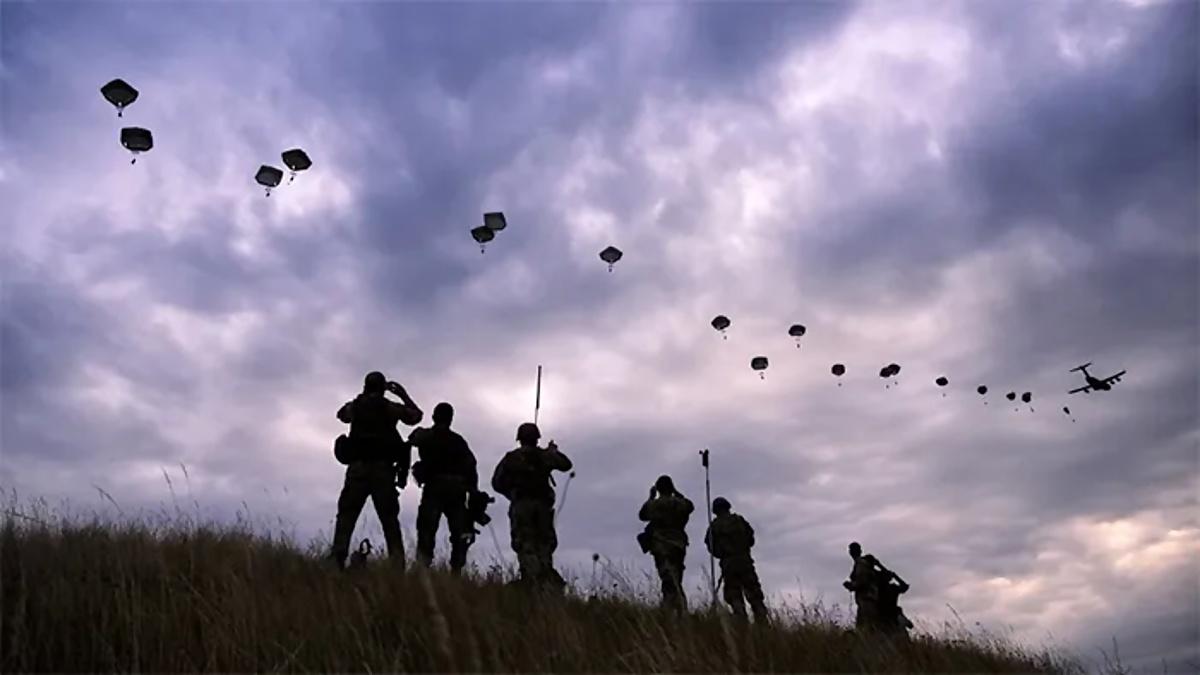
European countries are accelerating preparations for a possible major security crisis involving Russia
Lithuania has prepared a detailed evacuation plan for the population in the event of a military threat or major crisis. One of the main evacuation routes from Vilnius would lead toward Poland.
Polish authorities in the Podlaskie region are preparing to serve as a transit corridor for evacuees not only from Lithuania, but potentially from Latvia and Estonia as well.
The Lithuanian plan is designed to allow evacuation to begin before a threat becomes immediate, depending on the scale and location of the danger. Residents with private vehicles would use designated routes, while local authorities would organize transportation for others.
The preparations come amid increased military activity near NATO’s eastern frontier. Belarus is conducting exercises near the Polish and Lithuanian borders, including close to the strategically important Suwałki Gap, while Lithuania and other NATO states are conducting their own large-scale exercises.
The sense of urgency increased further after a suspected Russian military drone entered Lithuanian airspace this month and was shot down by a NATO fighter.
Switzerland is also adjusting to the deteriorating security environment. On September 18, the Swiss Federal Council formally approved its 2026 Security Policy Strategy.
The strategy identifies three central goals: strengthening national resilience, improving civilian protection and the ability to resist attacks, and increasing Switzerland’s military defense capabilities.
The broader picture is becoming increasingly clear: European governments are no longer treating a major confrontation with Russia as a purely theoretical scenario. They are now planning evacuation routes, strengthening civil defense and preparing military forces for the possibility that the war in Ukraine could eventually threaten NATO territory directly.
European intelligence officials warn that Russia could test NATO within “months, not years,”
potentially through drone or missile strikes, false-flag operations, influence operations or a limited incursion into NATO territory, The Guardian reports.
Czech intelligence chief Michal Koudelka said such scenarios were possible, while Polish Prime Minister Donald Tusk said intelligence suggested Moscow could seek to demonstrate that NATO’s Article 5 is “more theoretical than practical.” French President Emmanuel Macron described the warnings as “sound and well-documented.”
Baltic intelligence officials are more cautious, saying they see no indications of an imminent Russian attack, partly because Moscow remains heavily committed in Ukraine. However, they see preparations for potentially more decisive action and expect Russian sabotage to intensify, with operations increasingly targeting railways, Ukraine-related infrastructure, and European defense companies.
***

 English
 Arabic
 French
 Spanish
 Portuguese
 Deutsch
 Turkish
 Dutch
Dutch
 Italiano
 Russian
 Romaian
 Portuguese (Brazil)
 Greek
Greek