


 DONATIONS
 Worldwide Radio Stations
A real danger to humanity's survival: a study proves that stupidity is taking control of the world
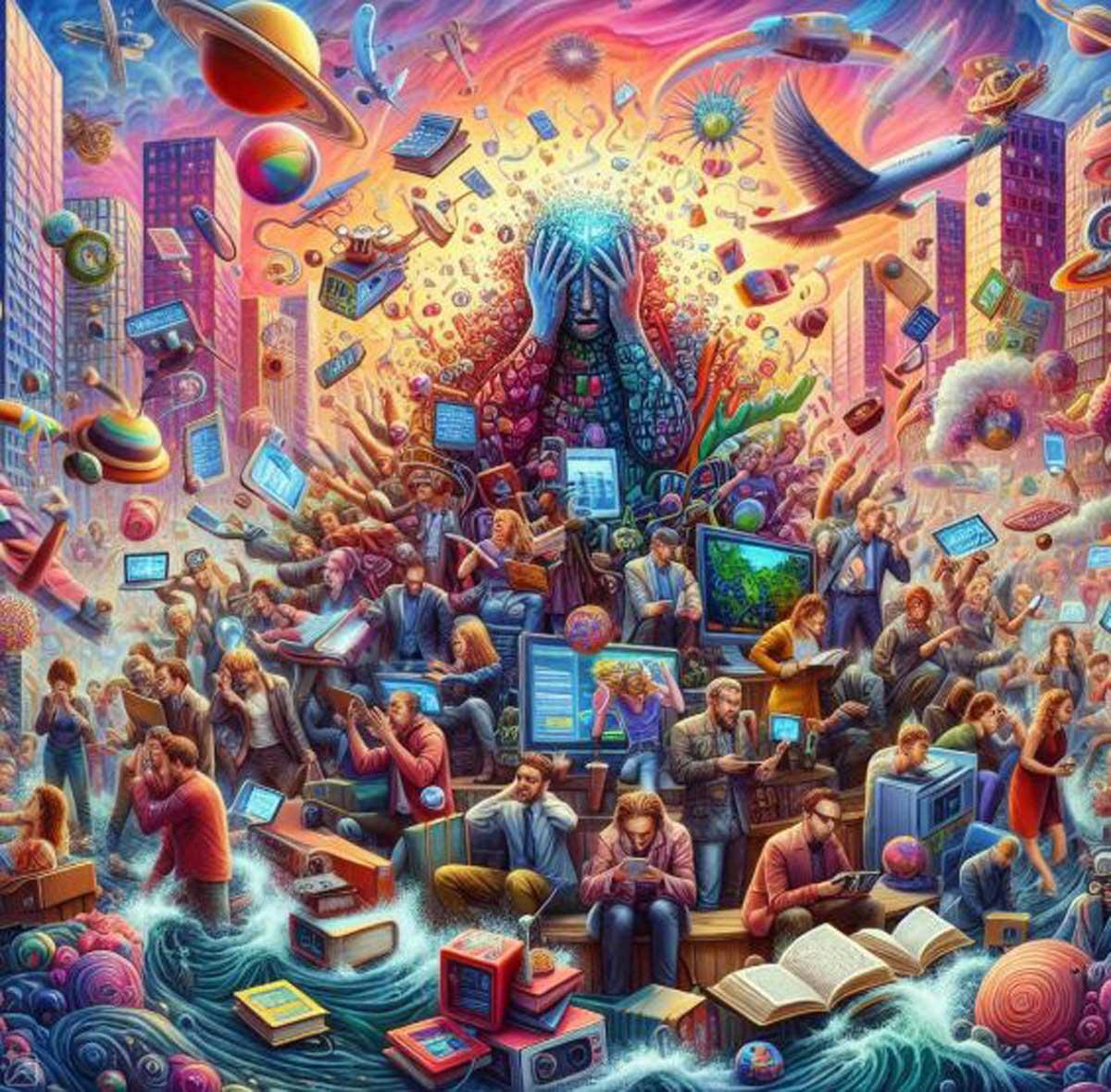
At the dawn of the internet age, optimism was almost messianic. Free access to information, instant communication between billions of individuals, social networks connecting all cultures, all languages, all continents...
...the reasoning seemed irrefutable: the more access people had to knowledge, the more rational, open-minded, and nuanced they would become. Humanity was finally going to mature.
Years have passed. And reality has slapped the dreamers in the face.
Technology has advanced at a dizzying pace. The average person carries in their pocket a device more powerful than the computers that guided the Apollo missions. In a matter of seconds, they have access to more information than the President of the United States had at his disposal fifty years ago. Except that instead of knowledge crushing stupidity, it's often the other way around: stupidity has learned to use technology better than reason.
The local idiot has become a global player
The number of superficial, impulsive people, impervious to critical thinking and dependent on tribal emotion, has probably not radically changed. Individuals like that have always existed. But in the past, their power was confined. The village idiot stayed in his village. He babbled in his corner of the bar, annoyed his family on Friday nights, and his influence ended there.
Today, this same individual holds in their hand a weapon of cognitive destruction of historic proportions. In a matter of minutes, they can spread a lie to millions of people. They can join forces with similar individuals across the globe. They can consume only information that confirms their pre-existing beliefs. They can live in an algorithmic bubble where every extreme opinion appears to them as "the truth the system is hiding." And, as a bonus, they receive a sense of power, community, and purpose.
Social media did not create human stupidity. It simply transformed it from a local nuisance into a global force.
Algorithms do not reward truth
The problem runs much deeper than politics. Platform algorithms aren't designed to promote truth, depth, or complexity. They're designed to maximize engagement. And what generates engagement? Anger. Fear. Outrage. Conspiracy theories. Hate. Instant gratification. A system that rewards quick emotional reactions will almost always crush the calm, nuanced, and analytical individual.
This results in an absurd situation: as the amount of information available in the world increases, the ability to distinguish truth from falsehood decreases among a massive fraction of the public.
We thought the internet would "democratize" knowledge. In reality, it has also democratized influence. A physics professor and a purveyor of conspiracy theories sometimes receive the exact same platform. An expert with forty years of experience has to compete to capture attention against a twelve-second TikTok video. It's not always the one who knows the most who wins—it's the one who evokes the most emotion.
The consequences are already visible everywhere.
The effects are already observable: extreme political polarization, mass conspiracy theories, collapse of trust in science, attacks on democratic institutions, public hysteria, addiction to screens, erosion of the ability to read complex texts, and increasing difficulty in conducting a serious discussion without each side turning into a howling tribe.
The author, Rami Yitzhar, an NLP trainer and founder of the news site "Inyane Merkazi," is careful to clarify: technology itself is not the enemy. The internet is not "evil." Social media is not diabolical. It has simply brought to light an unpleasant truth about human nature: information alone does not make a person intelligent. It sometimes simply gives the fool greater self-confidence.
The real challenge of the 21st century
The profound tragedy of our time lies in the gap between rapid technological progress and the emotional, moral, and cognitive development of humankind—which has not kept pace. Prehistoric man, endowed with the emotional brain of a hunter-gatherer, suddenly found himself equipped with the power of global communication. It is a dangerous combination.
The major challenge of the 21st century, therefore, may not be developing a new application, a new social network, or a new artificial intelligence. It is to train human beings capable of confronting, psychologically, morally, and cognitively, the power they already hold in their hands.
Otherwise, humanity could well fail — not through lack of technology, but through excessive stupidity.
Then, finally proved...
"The Difference Between Stupidity and Genius Is That only Genius Has Its Limits..."
***

 English
 Arabic
 French
 Spanish
 Portuguese
 Deutsch
 Turkish
 Dutch
Dutch
 Italiano
 Russian
 Romaian
 Portuguese (Brazil)
 Greek
Greek